
Research articles on GLP-1 medicines, peptides, nootropics, laboratory education, and grey-market quality are collected here in one current library. Browse by topic, read the latest publication cards, and expand the research context section when you want the evidence standards and editorial approach behind the summaries. Every article is educational research reference material—not medical advice, a treatment recommendation, or a substitute for a qualified clinician or the original study.
Latest research articles
-

Inside the Paradigm Peptides Case: How a $5 Million SARMs-That-Were-Actually-Testosterone Operation Ended in Federal Prison
Fifty-four thousand customers. Eighty countries. Five million dollars in proceeds. And a product that, when federal investigators finally tested it, sometimes wasn’t the product at all — it was testosterone, a Schedule III controlled substance, sold under the label of a legal-sounding SARM to people who had no idea what they were actually injecting. On…
-
Why We Built PepTools: A Free Peptide Research Calculator Suite
Every peptide research forum has the same recurring thread: someone did the reconstitution math by hand, dropped a decimal, and ended up with a concentration that was 10x off from what they intended. It happens because vial-and-syringe arithmetic looks simple until you’re doing it at your kitchen counter with a vial, a bottle of bacteriostatic…
-

TERN-601 Obesity Trial: Why Liver Safety Ended the Oral GLP-1 Program
The TERN-601 obesity trial delivered a useful warning for the next generation of oral GLP-1 medicines. The once-daily nonpeptide agonist produced dose-dependent weight loss, appetite suppression, and delayed gastric emptying in early clinical studies. But three Phase 2 participants developed liver-enzyme elevations consistent with potential drug-induced liver injury, including one potential Hy’s Law case. The…
-
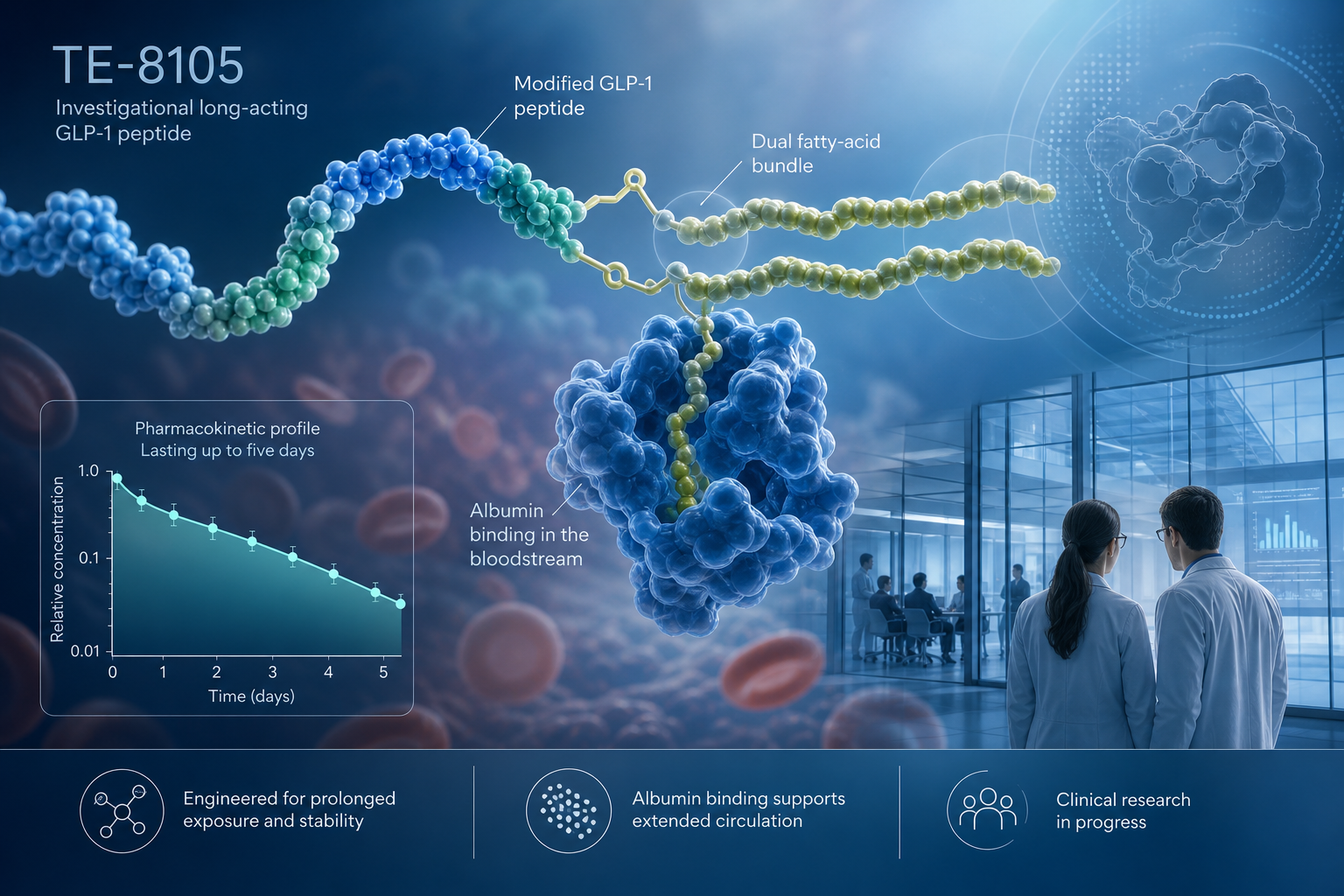
TE-8105 Long-Acting GLP-1: What the First Human Trial Found
A first-in-human study published July 30, 2026, provides the first peer-reviewed clinical data on TE-8105, an investigational long-acting GLP-1 receptor agonist designed for less frequent dosing. The small Phase 1/2a study found a plasma half-life of approximately 120 hours, early weight-loss signals, and mostly mild gastrointestinal adverse events. The findings are technically important, but they…
-
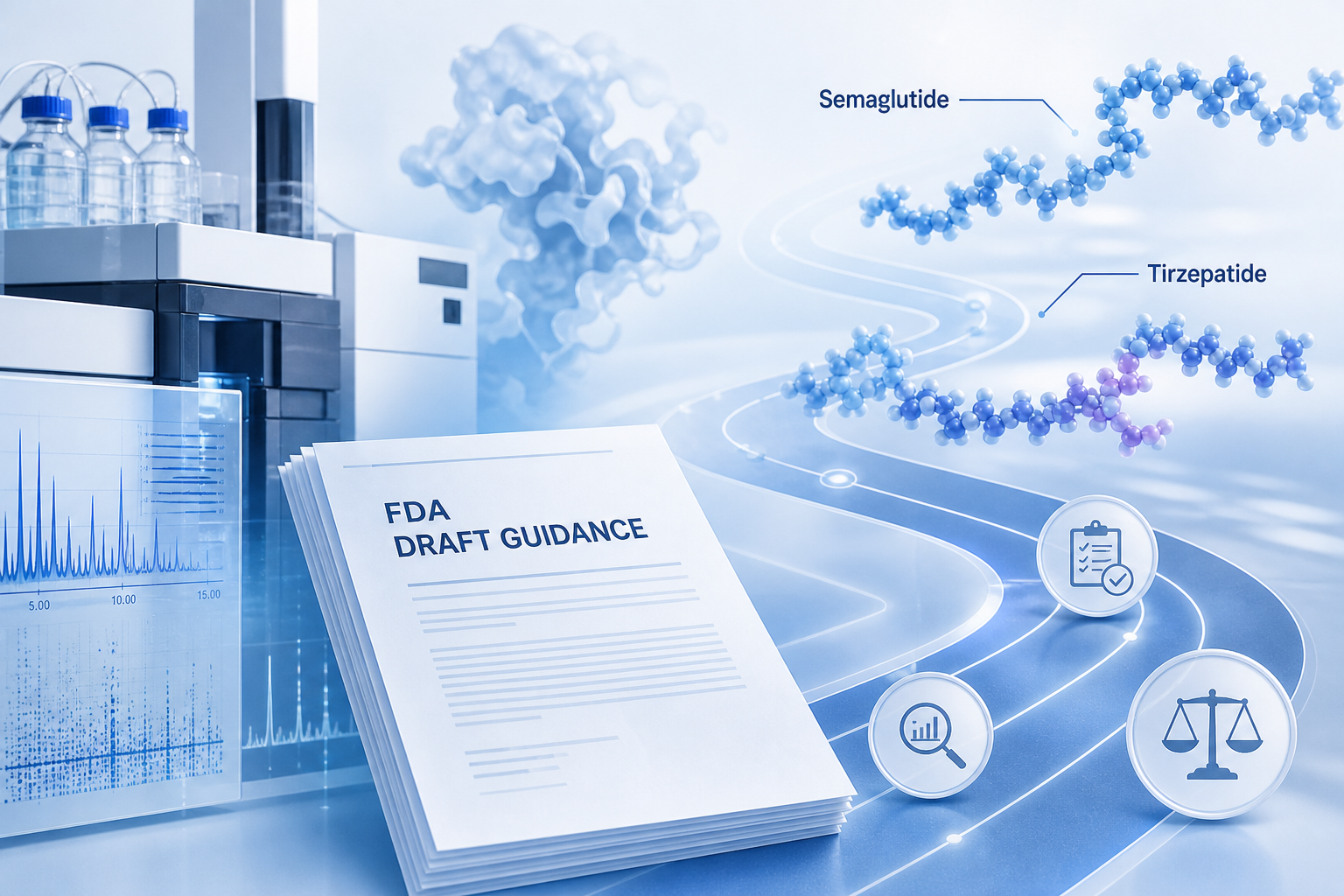
FDA Generic Peptide Guidance for Semaglutide and Tirzepatide
The FDA has published 17 revised draft product-specific guidances for generic peptide drugs, including semaglutide and tirzepatide. The documents explain how future applicants may demonstrate quality, similarity, biological activity, and therapeutic equivalence without treating complex peptides like ordinary small-molecule generics.
-

5,000 Shipments, 300 Cartons, One Port: Inside the Cincinnati Peptide Smuggling Bust — and Why Congress Is Now Writing to China’s Peptide Manufacturers
Somewhere between December 2024 and March 2025, officers at U.S. Customs and Border Protection’s Cincinnati port of entry started noticing a pattern in the international mail and express-consignment freight moving through one of the busiest package-processing hubs in the country. Cartons manifested as one thing kept turning out to contain something else — smaller parcels…
-
11% of Americans Are Now on a GLP-1 — and the Obesity Rate Is Finally Falling
A July 2026 Gallup poll finds 11% of American adults now take a GLP-1 for weight loss, up from 3% in 2024 — while the national obesity rate has dropped to its lowest point since 2022.
-
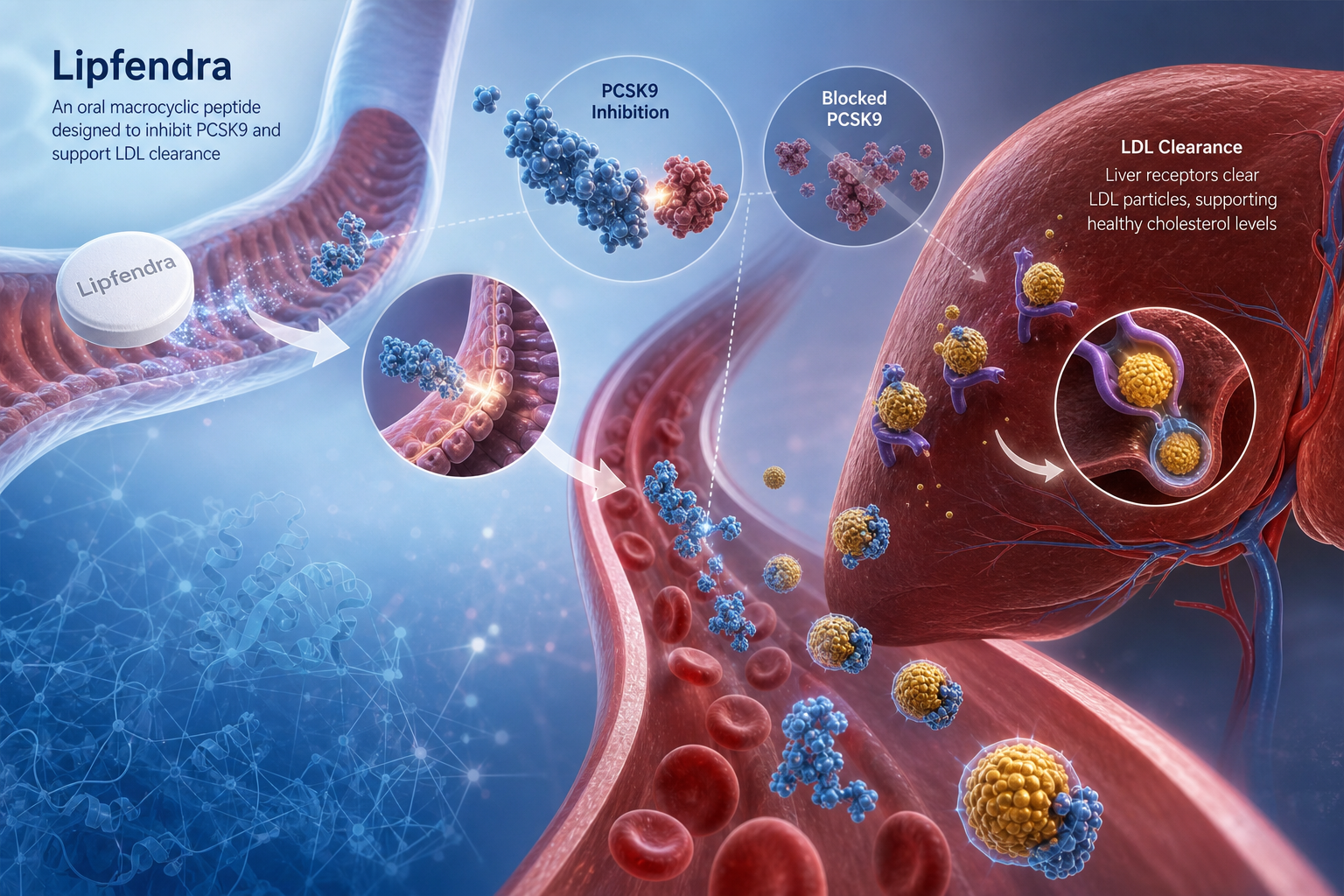
Lipfendra (Enlicitide): First Oral PCSK9 Inhibitor
Lipfendra, the brand name for enlicitide, is the first FDA-approved oral PCSK9 inhibitor. CORALreef trials found approximately 56% to 59% placebo-adjusted LDL-C reductions at Week 24, while cardiovascular-outcomes data are still pending.
-
Medicare Will Now Cover GLP-1s for Weight Loss at $50/Month — Here’s Who Qualifies
CMS launched the Medicare GLP-1 Bridge on July 1, 2026 — a $50/month copay demonstration covering Wegovy, Zepbound, and Foundayo through 2027. Here’s exactly who qualifies and what’s actually covered.
-

KN069 Obesity Trial: What Early GLP-1/GIP Blockade Data Shows
A first-in-human phase 1 study of KN069 introduces an unusual obesity-drug design: stimulating the GLP-1 receptor while blocking the GIP receptor. The early trial found dose-related weight reduction, a very long pharmacokinetic tail, and mostly mild-to-moderate gastrointestinal adverse events. The results are scientifically important because they challenge the assumption that more GIP activity is always…
Research context, evidence standards, and editorial approach

How to Use These Research Articles
Start with the topic links above to narrow the library, then open an article that matches your question. Compound profiles provide a quick orientation to names, mechanisms, research status, and linked literature, while full research articles explain study design, reported outcomes, and important limitations in more detail. Use publication dates and categories to understand context, and follow source links when you need to check the underlying paper, regulatory notice, or public record.
How We Read the Evidence
A finding in a randomized human trial does not carry the same weight as an observational association, an animal experiment, or an in-vitro result. When reading research articles, check the population, comparison group, sample size, follow-up period, measured endpoint, and whether the result was a primary or exploratory analysis. A plausible mechanism can explain why a compound is being studied, but it cannot establish human safety or efficacy by itself. We also separate approved medicines from investigational compounds and research-use-only materials so readers do not confuse biological interest with regulatory status.
Questions to Ask Before Drawing a Conclusion
- Was the study conducted in humans, animals, cells, or a laboratory model?
- Was there a control or comparison group, and was the study large enough to support the claim?
- Does the reported endpoint measure a meaningful outcome or only a short-term marker?
- Are the results peer reviewed, publicly registered, and reproducible?
- Does the article link to the primary source so the methods and limitations can be checked?
- What remains unknown, especially about long-term safety, product quality, or generalizability?
Editorial Approach and Primary Sources
GLP1Place aims to make technical research easier to follow without turning uncertain findings into promises. Articles identify whether evidence is clinical, observational, preclinical, mechanistic, or regulatory, and they use cautious language when a study cannot establish cause and effect. For primary literature, compare the article summary with PubMed research results and the original publication whenever a claim matters. Sources may change over time, so readers should verify current notices and consult qualified professionals for personal medical decisions.
Keeping Research Current
Research moves quickly, especially in obesity medicine, peptide science, cognitive research, and product-quality oversight. A newer paper may add context without overturning every earlier finding, while an agency alert or later correction can change how a claim should be understood. For that reason, this Blog page is organized as a living research library rather than a static list of conclusions. Check publication dates, read the most recent update when available, and treat headlines as a guide to the evidence—not as proof that a compound works, is safe, or is appropriate for a particular person. This page also connects related topics so readers can compare clinical research with preclinical studies and regulatory reporting in the same subject area.
Educational and research reference only: the information on GLP1Place is not medical advice, a diagnosis, or a treatment recommendation.
Use category archives to compare related reports and compound profiles; the date, category, and source context help explain how each item fits the broader research record. When a claim matters, start with the linked primary source and the relevant regulatory notice.