
Endotoxins, Mismatched Batches, and Vials That Don’t Match Their Labels: A Real Guide to Peptide Quality Testing
Purity percentage gets all the attention on a peptide Certificate of Analysis. It’s the number vendors put in bold, the
Educational guides on COAs, reconstitution, storage, and quality assessment for research compounds.
Purity percentage gets all the attention on a peptide Certificate of Analysis. It’s the number vendors put in bold, the
Every peptide research forum has the same recurring thread: someone did the reconstitution math by hand, dropped a decimal, and
Most research peptides require reconstitution before use in laboratory settings. This guide covers the basic lab science behind peptide reconstitution, handling, and storage.

The research peptide market includes both reputable suppliers and outright scams. This guide details the specific red flags, verification steps, and warning signs to evaluate before purchasing.

How to identify low-quality or fraudulent research peptide vendors: COA requirements, red flags in pricing and claims, and what independent testing data reveals about market quality.
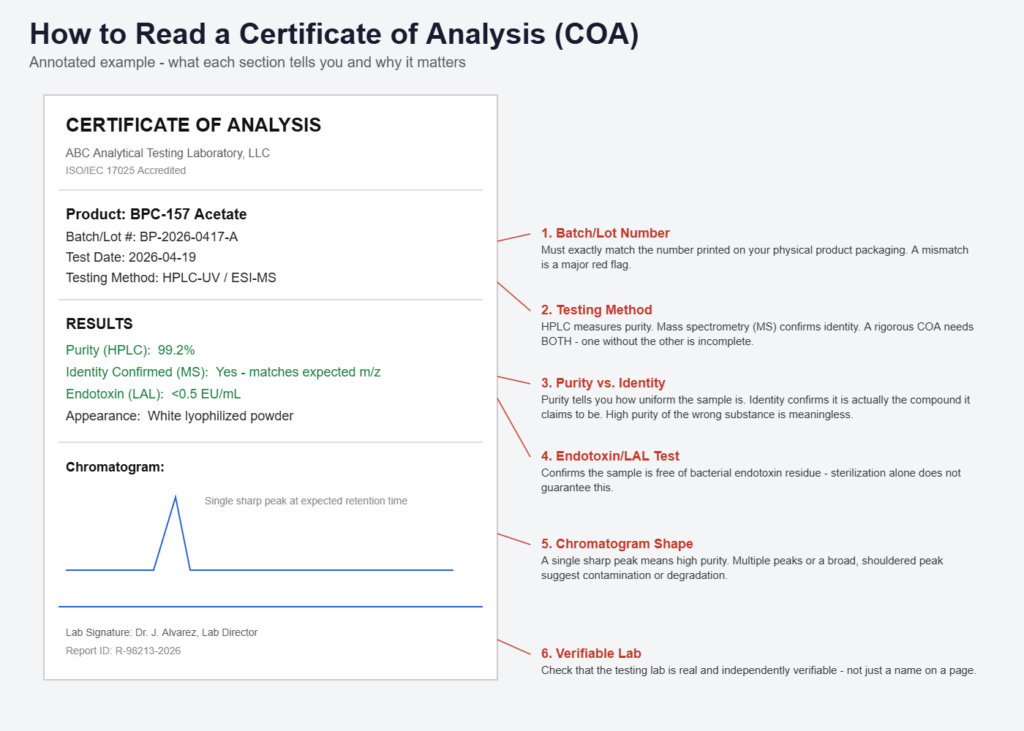
A Certificate of Analysis is the primary quality document for research peptides. This guide explains what each section means and what red flags to watch for.

RUO is a regulatory designation that shapes how research compounds can be sold and discussed. Here is what it actually means.