
Research articles on GLP-1 medicines, peptides, nootropics, laboratory education, and grey-market quality are collected here in one current library. Browse by topic, read the latest publication cards, and expand the research context section when you want the evidence standards and editorial approach behind the summaries. Every article is educational research reference material—not medical advice, a treatment recommendation, or a substitute for a qualified clinician or the original study.
Latest research articles
-

GLP-1 Venous Insufficiency Study Reports Lower Clot Risks
A large 2026 retrospective cohort study found that GLP-1 therapy was associated with fewer deep-vein thromboses, pulmonary embolisms, venous ulcers, soft-tissue infections, and deaths in adults with obesity and chronic venous insufficiency. The findings are clinically important but do not prove that GLP-1 medicines directly prevent clotting.
-
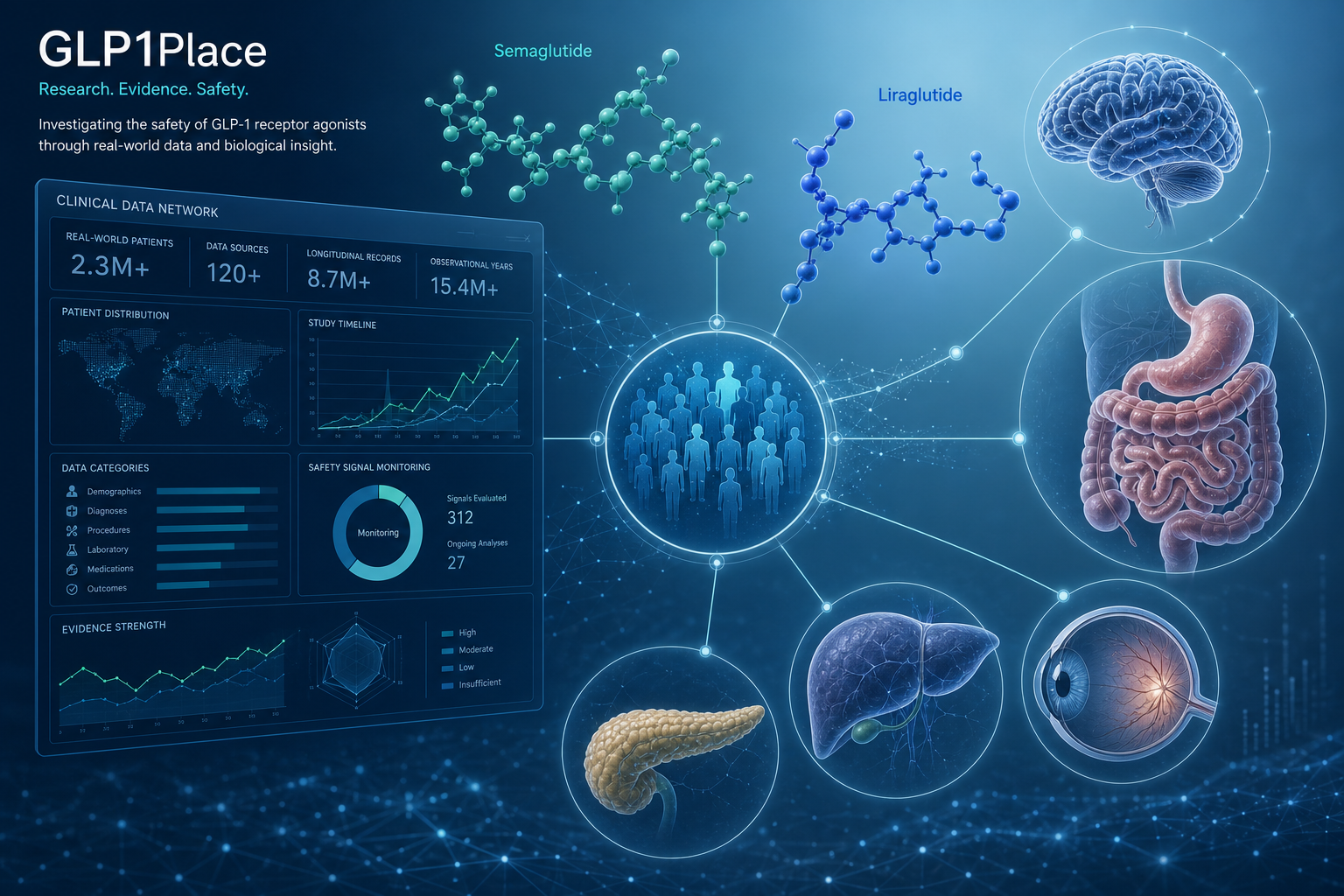
GLP-1 Safety Study 2026 Finds New Signals for Semaglutide and Liraglutide
A new multicentre cohort study published in 2026 detected several safety signals among people starting semaglutide or liraglutide for weight management, including psychiatric, gastrointestinal, liver, pancreatobiliary, and vision outcomes. The findings deserve attention, but they are associations from electronic-health-record data—not proof that GLP-1 medicines caused the events.
-

FDA Peptide Warning Letters: RUO and Intended Use in 2026
Several FDA warning letters dated August 24, 2026 provide a detailed explanation of how the agency evaluates online peptide marketing. The letters address retatrutide, semaglutide, tirzepatide, survodutide, mazdutide, SS-31, tesamorelin, PT-141, and bacteriostatic water, showing why a research-use-only disclaimer may not overcome claims that imply human treatment or injection use.
-

Mazdutide Phase 2 Trial: What the U.S. Results Mean for Next-Generation Obesity Drugs
A peer-reviewed U.S. phase 2 trial adds mazdutide to next-generation obesity-drug research. The dual agonist produced dose-dependent weight loss, including an 18.1% least-squares mean reduction at 32 weeks with 16 mg, while higher-dose tolerability remained a key limitation.
-
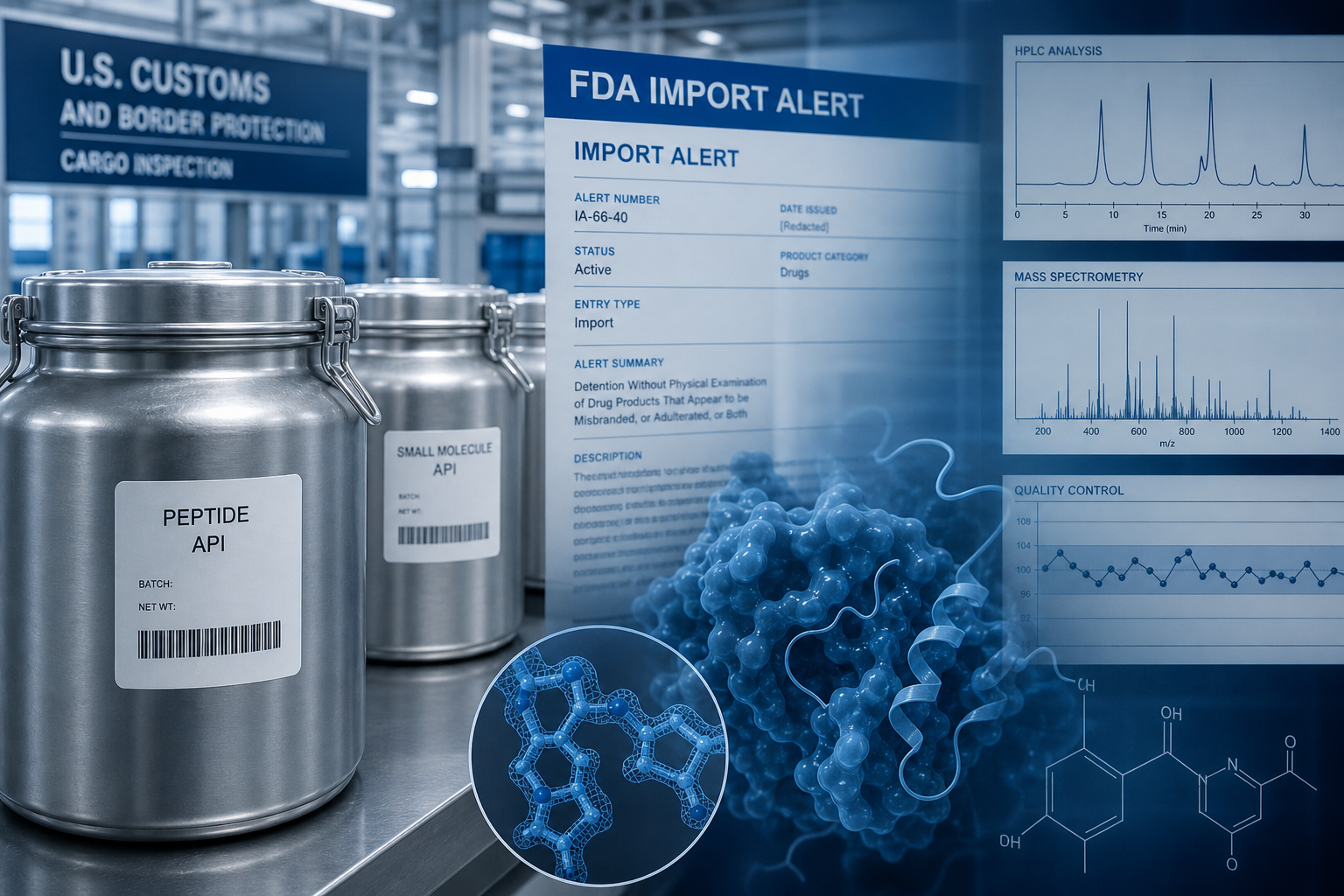
FDA GLP-1 Import Alert Targets Adulterated APIs
The FDA’s August 21, 2026 revision to Import Alert 66-80 gives field offices authority to detain potentially adulterated GLP-1 active pharmaceutical ingredients without physical examination. The action is not a blanket ban on legal imports or all lawful compounding. FDA says it evaluated 48 GLP-1 API sites and found 21% noncompliant or insufficiently responsive to…
-

Survodutide Phase 3 Results: The GLP-1/Glucagon Dual Agonist Explained
In the phase 3 SYNCHRONIZE-1 trial, the investigational GLP-1/glucagon dual agonist survodutide produced significantly greater weight loss than placebo in adults with obesity without diabetes. The findings do not establish superiority over semaglutide or tirzepatide, but they provide important late-stage evidence on efficacy and gastrointestinal tolerability.
-
Wegovy HD Is Here: FDA Approves 7.2mg Semaglutide With ~21% Average Weight Loss
The FDA approved Wegovy HD (semaglutide 7.2mg) on March 19, 2026 — the highest weight loss yet recorded for a Wegovy injection. Here’s what the STEP UP trial data, side-effect trade-offs, and pricing actually mean.
-
Endotoxins, Mismatched Batches, and Vials That Don’t Match Their Labels: A Real Guide to Peptide Quality Testing
Purity percentage gets all the attention on a peptide Certificate of Analysis. It’s the number vendors put in bold, the number researchers compare between suppliers, the number that shows up in marketing copy. It’s also, on its own, close to useless for answering the question that actually matters for anything going into a cell culture,…
-
One Receptor, Two, Three: How Retatrutide’s Triple-Agonist Design Beats Semaglutide and Tirzepatide
Semaglutide hits one receptor. Tirzepatide hits two. Retatrutide hits three. Here’s the actual biology behind why adding receptors keeps pushing GLP-1 drug efficacy higher — and where the ceiling might be.
-
FDA Approves Foundayo (Orforglipron): The First GLP-1 Pill With No Food or Water Rules
The FDA approved Foundayo (orforglipron) on April 1, 2026 — the first oral small-molecule GLP-1 with no food or water restrictions. Here’s what the ATTAIN trial data, pricing, and National Priority Voucher fast-track actually mean.
Research context, evidence standards, and editorial approach

How to Use These Research Articles
Start with the topic links above to narrow the library, then open an article that matches your question. Compound profiles provide a quick orientation to names, mechanisms, research status, and linked literature, while full research articles explain study design, reported outcomes, and important limitations in more detail. Use publication dates and categories to understand context, and follow source links when you need to check the underlying paper, regulatory notice, or public record.
How We Read the Evidence
A finding in a randomized human trial does not carry the same weight as an observational association, an animal experiment, or an in-vitro result. When reading research articles, check the population, comparison group, sample size, follow-up period, measured endpoint, and whether the result was a primary or exploratory analysis. A plausible mechanism can explain why a compound is being studied, but it cannot establish human safety or efficacy by itself. We also separate approved medicines from investigational compounds and research-use-only materials so readers do not confuse biological interest with regulatory status.
Questions to Ask Before Drawing a Conclusion
- Was the study conducted in humans, animals, cells, or a laboratory model?
- Was there a control or comparison group, and was the study large enough to support the claim?
- Does the reported endpoint measure a meaningful outcome or only a short-term marker?
- Are the results peer reviewed, publicly registered, and reproducible?
- Does the article link to the primary source so the methods and limitations can be checked?
- What remains unknown, especially about long-term safety, product quality, or generalizability?
Editorial Approach and Primary Sources
GLP1Place aims to make technical research easier to follow without turning uncertain findings into promises. Articles identify whether evidence is clinical, observational, preclinical, mechanistic, or regulatory, and they use cautious language when a study cannot establish cause and effect. For primary literature, compare the article summary with PubMed research results and the original publication whenever a claim matters. Sources may change over time, so readers should verify current notices and consult qualified professionals for personal medical decisions.
Keeping Research Current
Research moves quickly, especially in obesity medicine, peptide science, cognitive research, and product-quality oversight. A newer paper may add context without overturning every earlier finding, while an agency alert or later correction can change how a claim should be understood. For that reason, this Blog page is organized as a living research library rather than a static list of conclusions. Check publication dates, read the most recent update when available, and treat headlines as a guide to the evidence—not as proof that a compound works, is safe, or is appropriate for a particular person. This page also connects related topics so readers can compare clinical research with preclinical studies and regulatory reporting in the same subject area.
Educational and research reference only: the information on GLP1Place is not medical advice, a diagnosis, or a treatment recommendation.
Use category archives to compare related reports and compound profiles; the date, category, and source context help explain how each item fits the broader research record. When a claim matters, start with the linked primary source and the relevant regulatory notice.