Buying for research? Start with how we vet peptide vendors, so you know what a trustworthy supplier looks like.
What Makes a Peptide a Peptide? The Chemistry, Explained Simply
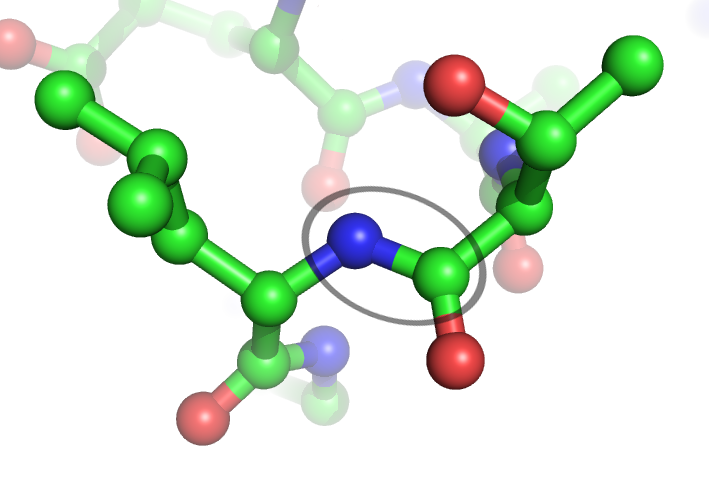
At its core, a peptide is a short chain of amino acids linked together by peptide bonds — a specific type of covalent bond formed when the carboxyl group (-COOH) of one amino acid reacts with the amino group (-NH2) of the next, releasing a water molecule in the process (a reaction chemists call condensation). This is the same basic chemistry that builds proteins; the difference is really just one of scale and, sometimes, structure.
The generally accepted convention is that chains of roughly 2 to 50 amino acids are called peptides, while longer chains that fold into complex three-dimensional shapes are called proteins. There’s no hard cutoff written into the laws of chemistry — it’s a naming convention biochemists use for convenience. A chain of 2 amino acids is a dipeptide, 3 is a tripeptide, and so on; once you’re in the dozens, people usually start calling it a polypeptide, and once it folds into a stable 3D structure with real biological machinery function, it’s typically called a protein.
What Is a Peptide, Chemically? Peptide Bonds and the Amino Acid Backbone
Every peptide bond forms an amide linkage, and the resulting backbone (technically the “primary structure”) is what determines the peptide’s basic identity. There are 20 standard amino acids the human body uses to build peptides and proteins, each with a different side chain (R-group) that gives it distinct chemical properties — some are hydrophobic, some are charged, some are small, some are bulky. The specific sequence of amino acids, read from the N-terminus (the end with a free amino group) to the C-terminus (the end with a free carboxyl group), is what dictates a peptide’s shape, stability, and biological activity. Change one amino acid in the sequence and you can dramatically change — or completely eliminate — the molecule’s function. This is why peptide chemists are so precise about sequence notation; a single substitution is the difference between two entirely different research compounds.
Peptides vs. proteins vs. amino acids: a quick comparison
It’s easy to conflate these three terms, so here’s the distinction researchers actually use:
- Amino acids are the individual building blocks — 20 standard ones occur naturally, each a small molecule with an amino group, a carboxyl group, and a unique side chain.
- Peptides are short chains of amino acids (roughly 2–50) linked by peptide bonds, generally too short to fold into a stable, independent 3D structure the way a protein does.
- Proteins are long chains (typically 50+ amino acids) that fold into defined secondary structures (alpha helices, beta sheets) and tertiary structures (the overall 3D shape), often assembling into even larger quaternary complexes with multiple subunits.
For a deeper glossary of terms like these, see our full peptide research glossary.
Natural vs. Synthetic Peptides: Where Do Research Peptides Come From?
Peptides aren’t a lab invention — your body is making and using them right now. Insulin, discovered and first isolated in 1921, is itself a peptide hormone (technically two peptide chains linked by disulfide bonds), and it remains one of the best-studied examples of how a peptide signal can regulate an entire physiological system. Oxytocin and vasopressin, both just nine amino acids long, regulate social bonding, labor, and water balance. Glucagon and GLP-1 — the natural hormone that semaglutide research is built around — are peptides your intestine produces after eating to regulate blood sugar and appetite.
So what is a peptide in a living body, specifically? Endogenous (naturally occurring) peptides fall into a few broad functional categories that researchers use as an organizing framework:
- Hormonal peptides — insulin, glucagon, GLP-1, growth hormone-releasing hormone (GHRH), and related molecules that circulate and bind specific receptors to regulate metabolism, growth, and homeostasis.
- Neuropeptides — signaling molecules in the nervous system, including endorphins, substance P, and neuropeptide Y, which modulate pain, mood, appetite, and stress responses.
- Antimicrobial peptides — part of the innate immune system, these short peptides (like defensins) directly disrupt microbial membranes.
- Structural and matrix peptides — fragments of larger structural proteins, such as collagen-derived peptides, that play a role in tissue architecture and repair signaling.
How synthetic research peptides are actually made
Since the 1960s, the dominant method for producing synthetic peptides has been Solid-Phase Peptide Synthesis (SPPS), a technique pioneered by Robert Bruce Merrifield, who won the 1984 Nobel Prize in Chemistry for the work. In SPPS, the first amino acid is anchored to an insoluble resin bead, and the chain is built one amino acid at a time by repeated cycles of protecting-group removal and coupling, working from the C-terminus toward the N-terminus. This is what makes it possible to reliably manufacture peptides with a precisely defined sequence — including analogs of natural hormones with modifications designed to change their stability, receptor binding, or half-life, which is exactly what a lot of current peptide research investigates.
Two chemistry families dominate the field: Fmoc (fluorenylmethyloxycarbonyl) and Boc (tert-butyloxycarbonyl) solid-phase synthesis, distinguished by which protecting-group chemistry they use. Fmoc synthesis has become the more common approach in modern peptide manufacturing because it avoids some of the harsher acids required by Boc chemistry.
Why Peptide Stability Is Its Own Research Problem
One of the most persistent challenges in peptide science is that peptides are chemically fragile compared to small-molecule drugs. Understanding what is a peptide’s stability profile matters for research validity. Peptide bonds are susceptible to hydrolysis (breakdown by water) and enzymatic cleavage by proteases, which is a major reason so many peptides have short biological half-lives and why proper storage matters so much for research validity. This is also why researchers studying oral or systemic peptide delivery have to account for degradation in the gastrointestinal tract and bloodstream — it’s a core pharmacokinetic obstacle, not a minor detail. For more on handling this correctly in a research setting, see our peptide reconstitution and stability guide.
Common strategies researchers study to improve peptide stability include amino acid substitutions that resist enzymatic cleavage (as seen in many GLP-1 receptor agonist analogs), cyclization (linking the N- and C-termini or side chains into a ring structure), PEGylation (attaching polyethylene glycol chains to reduce clearance), and lipidation (attaching fatty acid chains that promote albumin binding, extending circulating half-life).
For Research Use Only: What That Actually Means
Part of answering what is a peptide honestly is being clear about regulatory status. Many peptides sold for laboratory research are explicitly labeled “For Research Use Only” (RUO) — a regulatory category distinct from an FDA-approved drug. This label means the compound has not been approved by the FDA for diagnostic or therapeutic use in humans; it is intended strictly for in vitro study or for use by qualified researchers in controlled, non-clinical settings. It is not a claim about safety, purity, or effectiveness in humans — it is a legal and regulatory distinction. Confusing an investigational research compound with an approved medication is one of the most common and important errors to avoid when reading about this topic. If you’re new to interpreting these distinctions, our overview of what research peptides are and our first-timer’s guide both walk through the terminology in more depth.
How to Verify Any of This Yourself
Nothing here should be taken on faith — peptide chemistry and pharmacology are extensively documented in the primary scientific literature, and part of good research practice is checking primary sources rather than relying on secondary summaries (including this one). A few genuinely neutral, non-commercial places to start:
- PubMed (National Library of Medicine) — the standard starting point for searching peer-reviewed biomedical literature, including original peptide synthesis papers and pharmacology reviews.
- A peer-reviewed review of solid-phase peptide synthesis methodology on PubMed Central, if you want the full chemistry behind SPPS.
- UniProt — a free, comprehensive database of protein and peptide sequences maintained by a consortium of academic and research institutions.
- RCSB Protein Data Bank — for exploring the actual solved 3D structures of peptides and proteins.
- Google Patents — a free, searchable archive of peptide synthesis and formulation patents, useful for tracing how specific analogs and delivery methods were developed and by whom.
- ClinicalTrials.gov — the U.S. government’s registry of clinical trials, useful for checking whether a given peptide has (or hasn’t) entered human trials, and at what phase.
- FDA guidance on Research Use Only products — the primary regulatory source for what the RUO label legally means.
Once you’re comfortable navigating primary literature, our guide on how to read a peptide research paper covers how to evaluate study quality, sample sizes, and whether findings were in rodents, cell cultures, or humans.
What Medical Applications Are Researchers Actually Studying Peptides For?
This is the part most beginner guides skip, and it’s usually the reason someone got curious about peptides in the first place. Peptides aren’t a single trend — they’re a huge and genuinely active area of biomedical research, spanning everything from metabolic disease to tissue repair to cognition. Here’s an honest, non-hyped look at where the science currently stands, categorized by research area. None of this is a claim that any specific product sold anywhere is safe, effective, or approved for human use — it’s a map of what scientists are actually investigating.
Metabolic health and weight regulation
The GLP-1 receptor agonist class is the most clinically validated peptide research story of the last decade. Molecules like semaglutide and tirzepatide are FDA-approved prescription medications for type 2 diabetes and chronic weight management — proof that peptide-based drugs can move all the way from lab bench to pharmacy shelf. That approval pathway is exactly why the broader GLP-1/GIP peptide family remains one of the most heavily researched areas in endocrinology today, with ongoing trials looking at cardiovascular protection, fatty liver disease, and other metabolic endpoints.
Tissue repair and recovery
Peptides like BPC-157 and thymosin beta-4 (TB-500) have a substantial body of preclinical (animal and cell-culture) research behind them, examining effects on gut lining integrity, tendon-to-bone healing, and general wound repair. This is early-stage science — promising in rodent models, but not yet established in large human clinical trials — which is exactly why the research community treats these findings as a starting point rather than a conclusion.
Growth hormone axis and body composition
Growth hormone secretagogues such as ipamorelin and CJC-1295 are studied for how they influence the body’s natural, pulsatile release of growth hormone — a mechanism relevant to research on lean mass, recovery, and sleep architecture. Because they act upstream of growth hormone itself rather than replacing it directly, researchers are particularly interested in whether this produces a more physiologic effect profile than direct hormone administration.
Cognitive function and mood
Semax and Selank are peptides with a longer clinical history in Russia, where published literature has examined their effects on attention, stress response, and anxiety-like symptoms. Western researchers have taken a growing interest in replicating and extending this work, though independent large-scale trials outside that original research context are still limited.
Immune modulation and longevity
Peptides such as thymosin alpha-1 have been studied for immune system regulation, including research contexts involving chronic infection and immune senescence. Separately, short regulatory peptides like epitalon have decades of published Russian aging-biology research behind them, focused on pineal gland function and cellular aging markers — an active but still evolving corner of longevity science.
A note on all of the above: preclinical (cell and animal) research findings do not automatically translate to humans, and “studied in research literature” is not the same thing as “approved medical treatment” or “safe for personal use.” Everything referenced here is presented as a snapshot of the active scientific literature, for research and educational context only — not as medical advice, and not as an endorsement of using any of these compounds outside a legitimate research setting. See our full disclaimer for details.
Explore Specific Research Peptides
Every research peptide has its own sequence, mechanism, and body of literature. Rather than treat “peptides” as one interchangeable category, it’s worth looking at individual compounds directly. A few frequently studied examples, each with a dedicated profile covering mechanism, research status, and sourcing considerations:
- Semaglutide — a GLP-1 receptor agonist and one of the most extensively studied metabolic peptides in current research.
- Tirzepatide — a dual GIP/GLP-1 receptor agonist studied for its combined effect on two incretin pathways.
- BPC-157 — a partial peptide fragment derived from a protein found in gastric juice, studied for tissue repair signaling.
- TB-500 — a synthetic fragment of thymosin beta-4, studied in the context of cell migration and wound healing.
- Ipamorelin — a selective growth hormone secretagogue studied for its effect on the growth hormone axis.
- CJC-1295 — a growth hormone-releasing hormone (GHRH) analog, often studied alongside GHRP-class peptides.
- GHK-Cu — a naturally occurring copper-binding tripeptide studied for its role in skin and connective tissue signaling.
- Melanotan II — a synthetic analog of alpha-melanocyte-stimulating hormone (α-MSH).
- SS-31 (Elamipretide) — a mitochondria-targeted peptide studied for its interaction with cardiolipin.
- MOTS-c — a mitochondrial-derived peptide studied in the context of metabolic regulation.
- Epithalon — a synthetic tetrapeptide studied in relation to telomerase activity and aging biology.
Every compound profile links back to primary literature so you can verify claims directly rather than taking a summary at face value.
Frequently Asked Questions
What’s the simplest way to describe a peptide?
A short chain of amino acids linked together by peptide bonds — generally somewhere between 2 and 50 amino acids long.
Is a peptide the same thing as a protein?
They’re made of the same building blocks, but peptides are shorter chains (roughly under 50 amino acids) while proteins are longer, often more complex, folded structures. The line between the two categories is a convention, not a strict chemical rule.
Are peptides naturally found in the human body?
Yes — insulin, oxytocin, glucagon, and GLP-1 are all naturally occurring peptides your body produces constantly as signaling molecules. Research and pharmaceutical peptides typically work by mimicking, amplifying, or modifying these existing biological signals.
Why can’t most peptides just be taken as a pill?
The digestive system is built to break peptide bonds apart as part of normal digestion, so an unprotected peptide taken orally is typically broken down before it can act — which is why most peptide-based medications are injected or specially formulated to survive digestion.
How are research peptides actually manufactured?
The overwhelming majority are made through Solid-Phase Peptide Synthesis (SPPS), a chemical process that builds the amino acid chain one link at a time on a solid support bead, then purifies and tests the finished product for identity and purity.
Where can I learn what specific peptides are studied for?
Our Peptide Research Hub covers individual compounds in depth, including their mechanisms and the current state of published evidence for each.
Continue Your Research Journey
Now that you understand the biochemistry, here’s where to go next:
- How Do I Become a Researcher? — how everyday people participate in real citizen science and self-directed research, no credentials required.
- First-Timer’s Research Guide — the practical, step-by-step process from ordering a compound to your first documented research session.
- How to Choose a Vendor — how to read a Certificate of Analysis and avoid common sourcing mistakes.
Educational content only. This page describes general peptide biochemistry and is not medical advice. Research peptides discussed elsewhere on this site are intended for laboratory research use only.