
Research articles on GLP-1 medicines, peptides, nootropics, laboratory education, and grey-market quality are collected here in one current library. Browse by topic, read the latest publication cards, and expand the research context section when you want the evidence standards and editorial approach behind the summaries. Every article is educational research reference material—not medical advice, a treatment recommendation, or a substitute for a qualified clinician or the original study.
Latest research articles
-
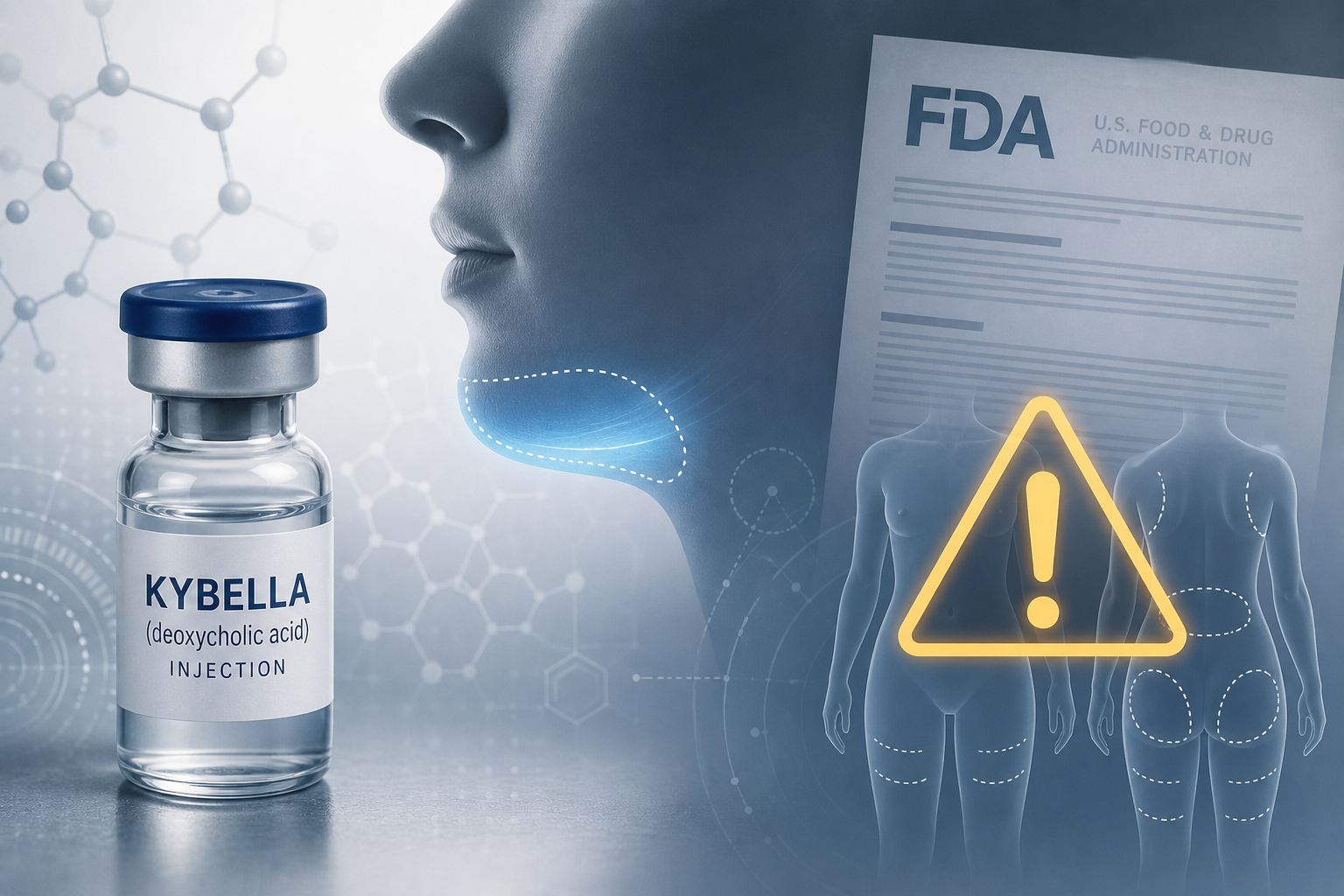
Kybella Off-Label Injection Warning: FDA Adds Safety Information
The FDA added Kybella warning information after reviewing adverse-event reports involving deoxycholic acid injections outside the approved under-chin area. The agency identified 129 non-submental cases and 117 unresolved nodules or masses, clarifying the safety boundary between FDA-approved submental treatment and broader injection-lipolysis claims.
-

FDA GLP-1 Generic Drug Workshop Clarifies Quality Questions for Semaglutide and Tirzepatide
The FDA’s September 23–24, 2026 workshop on the GLP-1 generic drug pathway marks a major regulatory shift from broad policy statements toward detailed scientific expectations. FDA and academic experts addressed peptide sameness, impurity profiling, immunogenicity, oral delivery, injector compatibility, human factors, and bioequivalence. The event does not mean generic semaglutide or tirzepatide is approved, but…
-

September 2026 GLP-1 API Import Alert: Orforglipron Added to FDA Green List Framework
FDA’s September 21, 2026 revision to Import Alert 66-80 adds specified orforglipron API and intermediate entries to the Green List framework, updates product coding and details manufacturer documentation FDA may evaluate. The 21% figure among 48 assessed sites remains important context from the ongoing GLP-1 API compliance effort.
-

BGM0504 Phase 2 Obesity Trial: Dual GLP-1/GIP Results
A peer-reviewed phase 2 trial published September 17, 2026, found that once-weekly BGM0504 produced dose-dependent weight loss of up to 18.33% at 24 weeks in Chinese adults with overweight or obesity without diabetes. The dual GLP-1/GIP agonist produced a substantial placebo-controlled signal, but the 120-person study, short follow-up, specific population, and frequent gastrointestinal adverse events…
-
FDA Unapproved GLP-1 Alert: 1,720+ Adverse-Event Reports and New Quality Warnings
The FDA’s February 4, 2026 alert on unapproved GLP-1 drugs brings several risks into one regulatory warning: more than 1,720 reported adverse events involving compounded semaglutide and tirzepatide, fraudulent pharmacy labels, dosing errors, questionable salt forms, shipping-temperature failures, and illegal retatrutide marketing. Here is what the alert means and how it changes the quality conversation…
-
FDA Expands Yellow Oleander Weight-Loss Alert to Three More Products
The FDA added three more products to its continuing yellow oleander safety alert on September 17, 2026. Laboratory testing found toxic yellow oleander in two Niwali products and Easy Forte Natural Fiber, reinforcing concerns that botanical weight-loss products may be substituted, mislabeled, or contaminated. The update is materially different from the agency’s August warning because…
-
Semaglutide Food Reward Study: Why Calorie Reduction Lasted 60 Weeks
A 60-week randomized controlled trial provides unusually detailed evidence about how semaglutide changes eating behavior over time. Participants receiving semaglutide 2.4 mg consumed fewer calories at weeks 20, 40, and 60, while some subjective appetite and food-reward effects became less distinct after the first 20 weeks. The findings help explain why reduced energy intake can…
-
FDA Removes Suicide Warning From GLP-1 Drugs: Evidence
The FDA’s January 13, 2026 decision to request removal of suicidal ideation and behavior warnings from certain GLP-1 drug labels closes a major safety question that began with postmarketing reports in 2023. The agency said its review of clinical trials, observational studies, pooled analyses, and case reports found no increased risk of suicidal thoughts or…
-
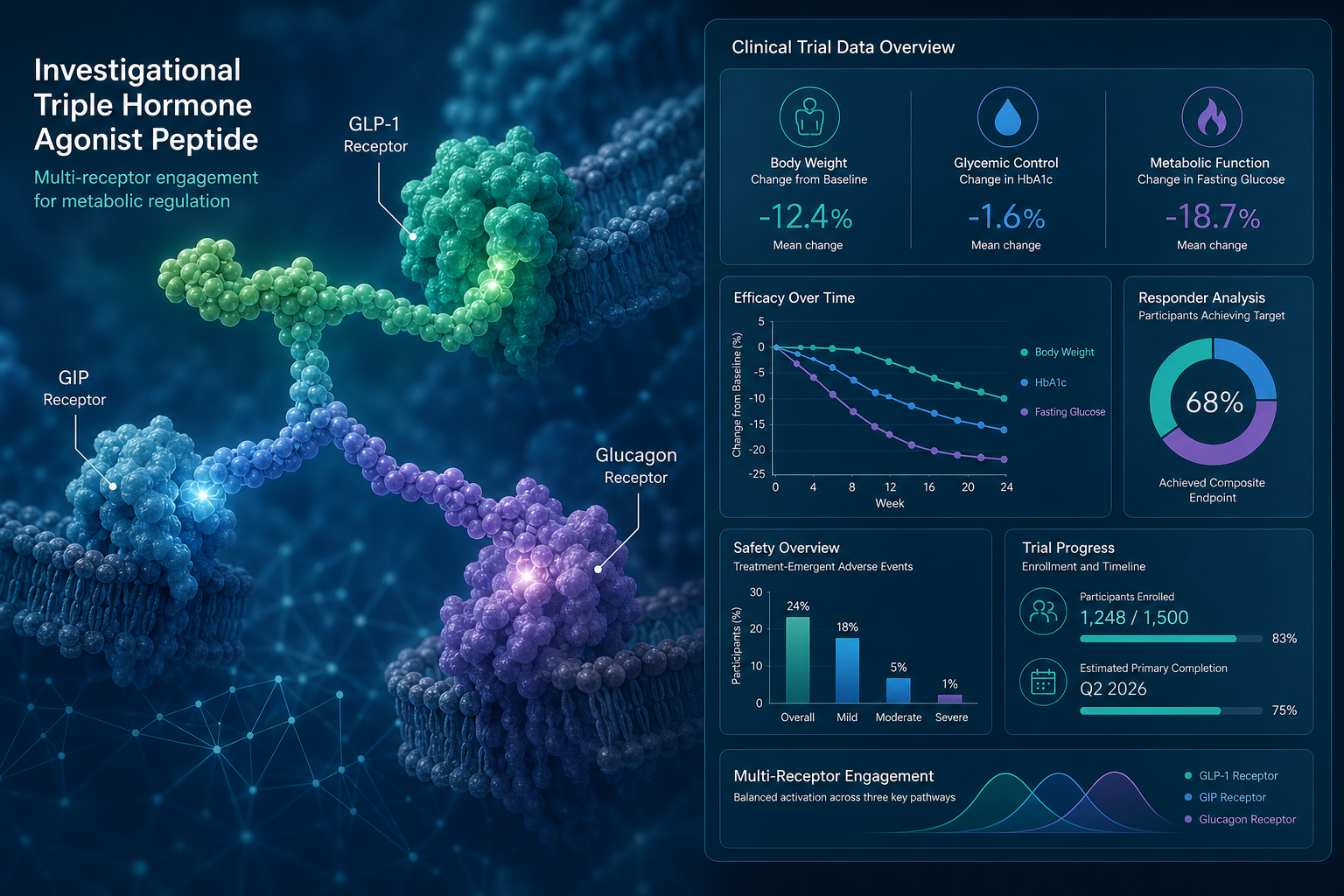
UBT251 Phase 1 Trial: Novo’s Triple Agonist Shows Rapid Weight Loss
A first-in-human UBT251 phase 1a/1b trial published September 8, 2026, provides the clearest peer-reviewed human data yet on Novo Nordisk’s licensed GLP-1/GIP/glucagon triple agonist. Participants with overweight or obesity receiving once-weekly UBT251 lost an average of 8.96 to 13.48 kilograms over 12 weeks, while placebo participants gained 1.57 kilograms. The study also reported reductions in…
-

Semaglutide Lifespan Study: Older Mice Lived Longer in New Nature Research
A new Nature study has placed semaglutide in the longevity conversation. Researchers found that treatment begun in 20-month-old female mice extended median lifespan from 742 to 834 days while improving physical function, glucose control, exploratory behavior, spatial memory, stem-cell activity, inflammation, and several molecular markers associated with aging. The findings are striking, but they remain…
Research context, evidence standards, and editorial approach

How to Use These Research Articles
Start with the topic links above to narrow the library, then open an article that matches your question. Compound profiles provide a quick orientation to names, mechanisms, research status, and linked literature, while full research articles explain study design, reported outcomes, and important limitations in more detail. Use publication dates and categories to understand context, and follow source links when you need to check the underlying paper, regulatory notice, or public record.
How We Read the Evidence
A finding in a randomized human trial does not carry the same weight as an observational association, an animal experiment, or an in-vitro result. When reading research articles, check the population, comparison group, sample size, follow-up period, measured endpoint, and whether the result was a primary or exploratory analysis. A plausible mechanism can explain why a compound is being studied, but it cannot establish human safety or efficacy by itself. We also separate approved medicines from investigational compounds and research-use-only materials so readers do not confuse biological interest with regulatory status.
Questions to Ask Before Drawing a Conclusion
- Was the study conducted in humans, animals, cells, or a laboratory model?
- Was there a control or comparison group, and was the study large enough to support the claim?
- Does the reported endpoint measure a meaningful outcome or only a short-term marker?
- Are the results peer reviewed, publicly registered, and reproducible?
- Does the article link to the primary source so the methods and limitations can be checked?
- What remains unknown, especially about long-term safety, product quality, or generalizability?
Editorial Approach and Primary Sources
GLP1Place aims to make technical research easier to follow without turning uncertain findings into promises. Articles identify whether evidence is clinical, observational, preclinical, mechanistic, or regulatory, and they use cautious language when a study cannot establish cause and effect. For primary literature, compare the article summary with PubMed research results and the original publication whenever a claim matters. Sources may change over time, so readers should verify current notices and consult qualified professionals for personal medical decisions.
Keeping Research Current
Research moves quickly, especially in obesity medicine, peptide science, cognitive research, and product-quality oversight. A newer paper may add context without overturning every earlier finding, while an agency alert or later correction can change how a claim should be understood. For that reason, this Blog page is organized as a living research library rather than a static list of conclusions. Check publication dates, read the most recent update when available, and treat headlines as a guide to the evidence—not as proof that a compound works, is safe, or is appropriate for a particular person. This page also connects related topics so readers can compare clinical research with preclinical studies and regulatory reporting in the same subject area.
Educational and research reference only: the information on GLP1Place is not medical advice, a diagnosis, or a treatment recommendation.
Use category archives to compare related reports and compound profiles; the date, category, and source context help explain how each item fits the broader research record. When a claim matters, start with the linked primary source and the relevant regulatory notice.