
Research articles on GLP-1 medicines, peptides, nootropics, laboratory education, and grey-market quality are collected here in one current library. Browse by topic, read the latest publication cards, and expand the research context section when you want the evidence standards and editorial approach behind the summaries. Every article is educational research reference material—not medical advice, a treatment recommendation, or a substitute for a qualified clinician or the original study.
Latest research articles
-
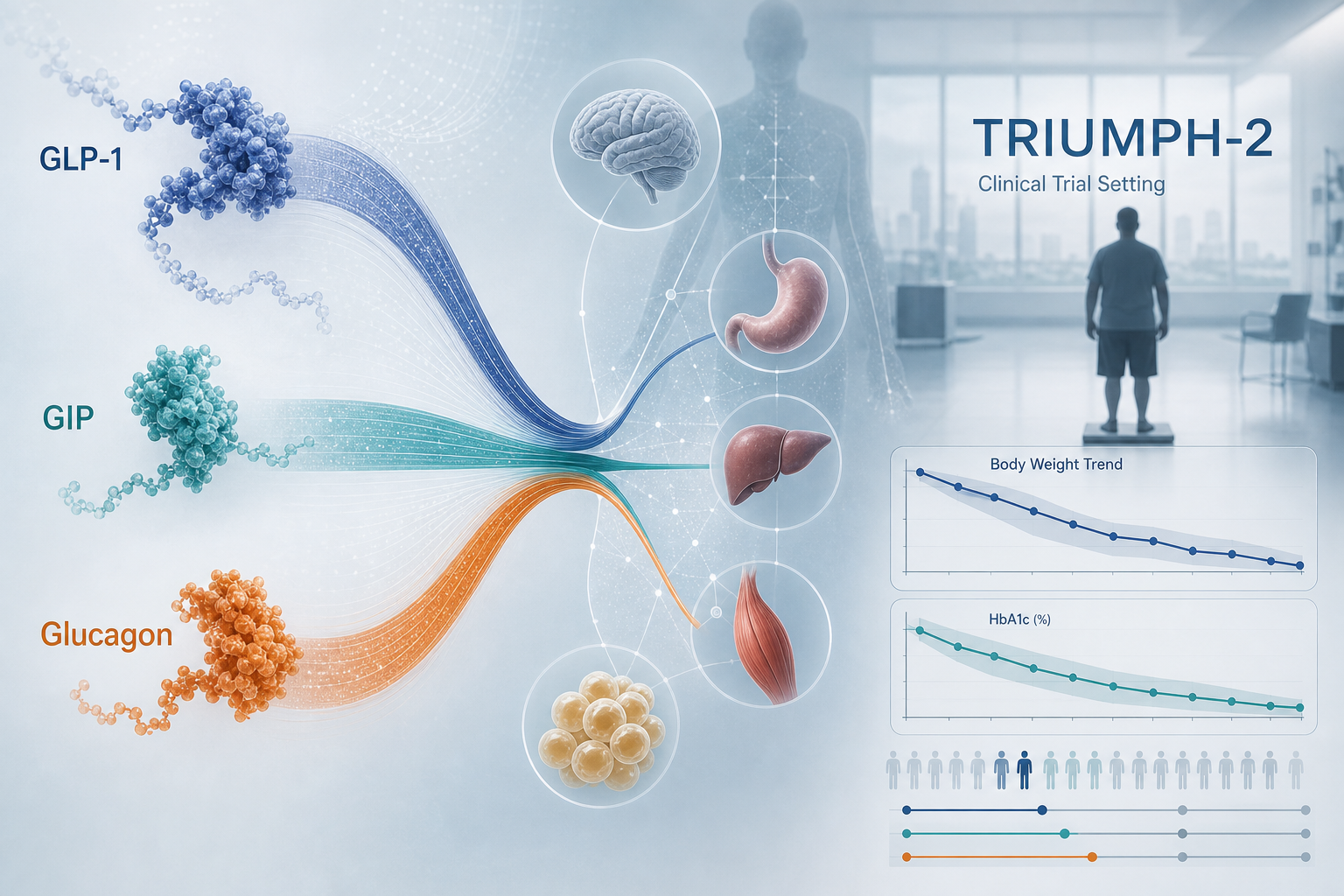
Retatrutide in Type 2 Diabetes: What TRIUMPH-2 Found
The September 29, 2026 publication of TRIUMPH-2 adds detailed phase 3 evidence for retatrutide in adults with both obesity and type 2 diabetes. In 1,152 participants, the investigational GIP, GLP-1, and glucagon receptor agonist produced dose-related weight loss and meaningful HbA1c reductions over 80 weeks.
-

Petrelintide Phase 2 Trial: What ZUPREME-1 Found
The ZUPREME-1 Phase 2 publication reports that the investigational once-weekly amylin analogue petrelintide produced up to 10.7% mean weight loss at week 42 versus 1.7% with placebo in 493 adults with obesity or overweight. The placebo-controlled trial also reported nausea more often with petrelintide, while direct comparisons with GLP-1 medicines remain unavailable.
-

Retatrutide Phase 3 Obesity Trial: What TRIUMPH-1 Shows
The September 29, 2026 New England Journal of Medicine publication of TRIUMPH-1 provides the first detailed peer-reviewed phase 3 results for retatrutide in obesity. In 2,339 adults without diabetes, the investigational triple agonist produced dose-dependent weight loss over 80 weeks, while prespecified subgroups reported improvements in knee osteoarthritis pain and obstructive sleep apnea. The findings…
-
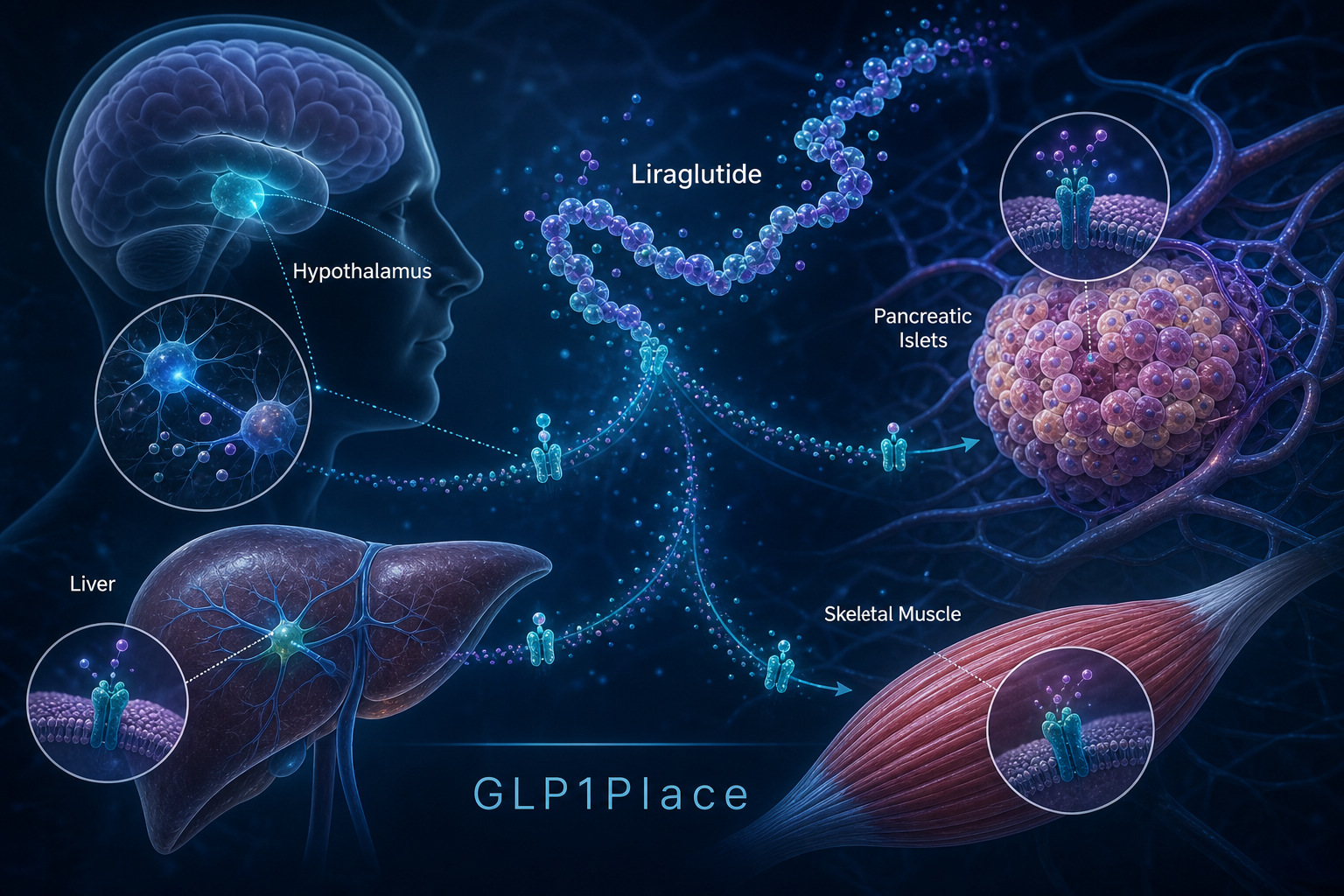
Liraglutide Metabolic State Study: Why GLP-1 Effects Change With Diabetes
A 2026 mechanistic study suggests liraglutide can use different brain, pancreatic, liver, and peripheral pathways as metabolic dysfunction progresses. Human-islet and mouse findings explain biology, not individualized treatment selection.
-

Ribupatide First-In-Human Trial: What the HRS9531 Data Shows
A September 2026 peer-reviewed study provides the first detailed human data on ribupatide, also known as HRS9531. The dual GLP-1/GIP receptor agonist was tested in 90 healthy Chinese adults across single- and multiple-ascending-dose cohorts. After four weekly doses, mean weight loss ranged from 4.3 to 7.7 kilograms, while no serious treatment-emergent adverse events or deaths…
-

Tirzepatide After Gastric Bypass: What the GRABS Trial Tests
The GRABS trial is testing tirzepatide after gastric bypass in adults who remain obese despite Roux-en-Y surgery. Published in September 2026, the study is important because post-bariatric patients have often been excluded from major obesity-drug trials. The paper reports the trial’s rationale, design, and baseline cohort—not its final weight-loss results.
-
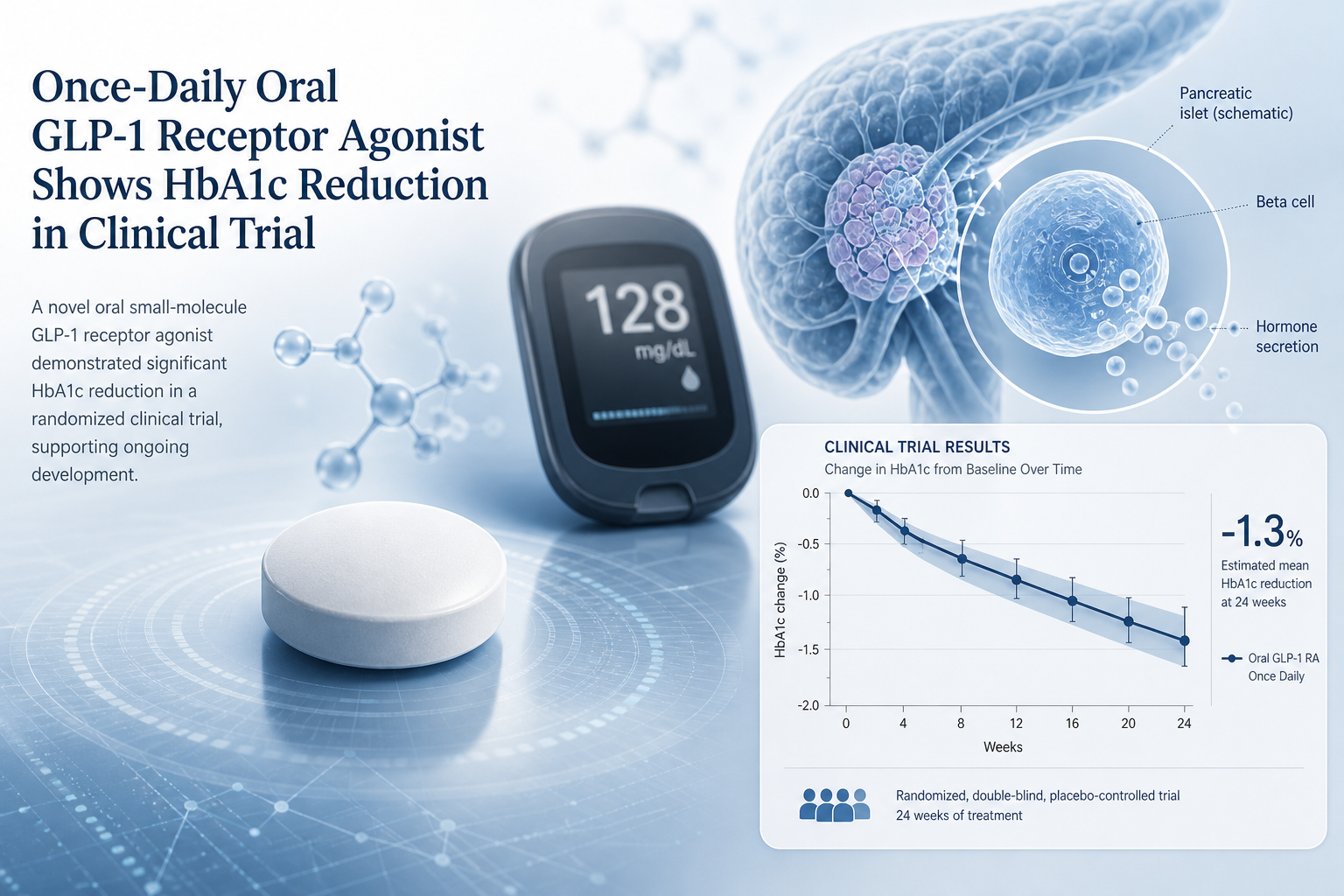
Safiglipron Phase 3 Trial: What the New Oral GLP-1 Data Shows
The phase 3 OUTSTAND-1 trial provides the strongest human evidence yet for safiglipron, an oral small-molecule GLP-1 receptor agonist formerly known as HRS-7535. In 284 Chinese adults with early type 2 diabetes, once-daily safiglipron produced placebo-adjusted HbA1c reductions of 1.20 to 1.45 percentage points after 32 weeks. The trial also tested an important practical advantage:…
-
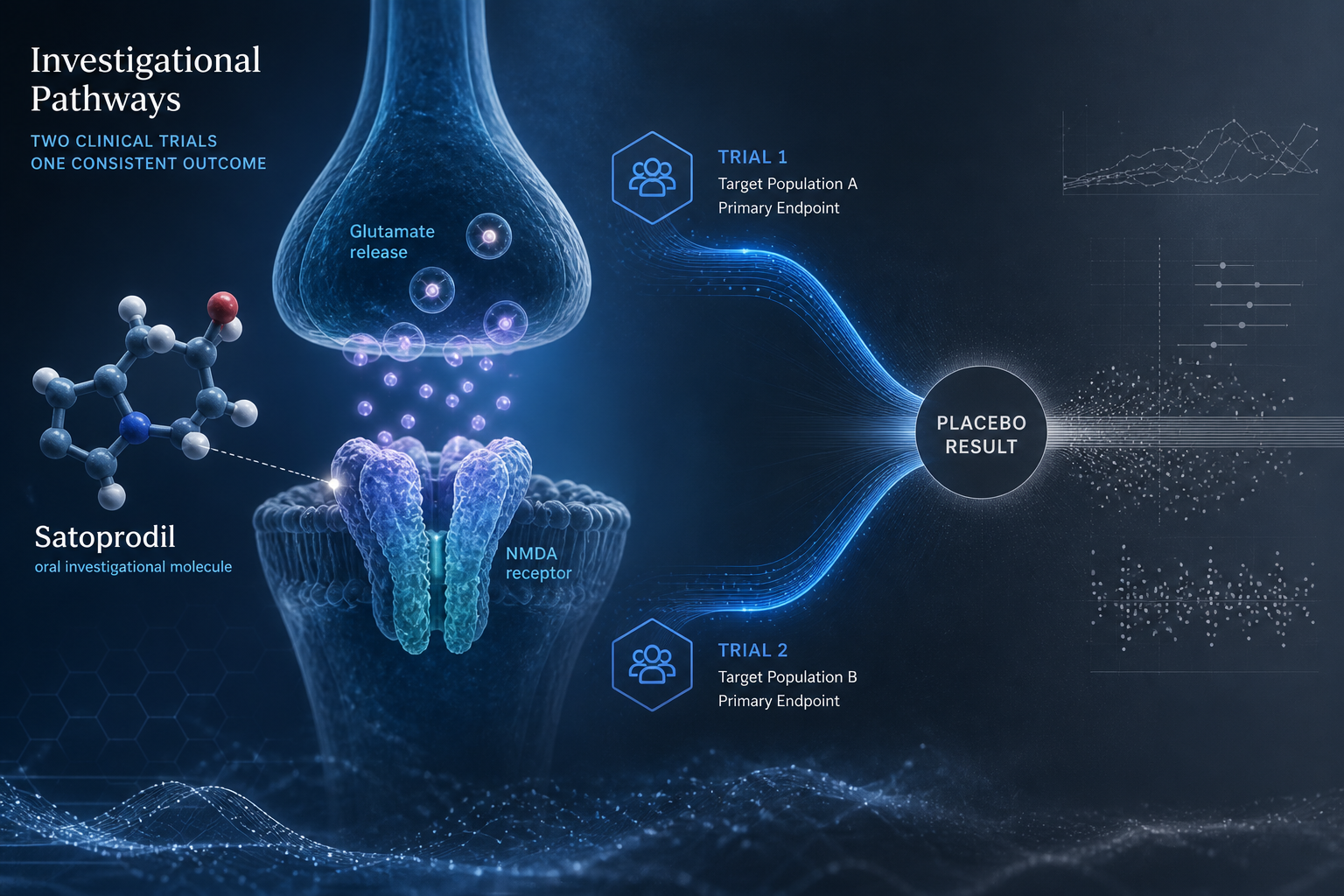
Satoprodil Phase 2 Depression Trials: Why the GluN2B Strategy Failed to Beat Placebo
Two randomized phase 2 trials published in Neuropsychopharmacology on September 5, 2026 found that satoprodil, also known as BI 1569912, did not reduce depressive symptoms beyond placebo when used alone or alongside standard antidepressants. The result is an important test of non-ketamine glutamate drug development: the compound was generally tolerated, but the GluN2B-selective mechanism did…
-
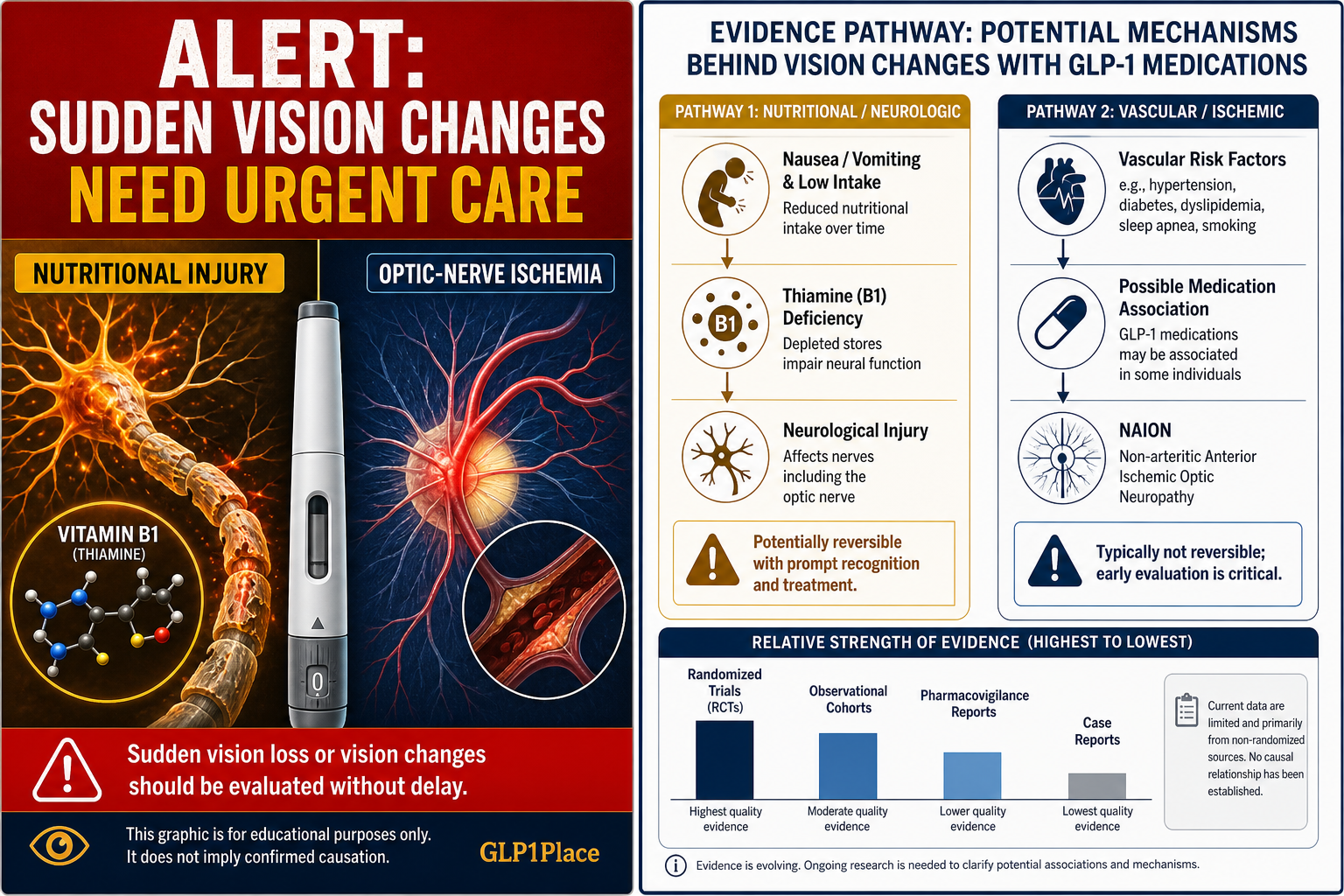
GLP-1 Vision Loss Reports: B1 Deficiency and NAION
Reports of vision problems in GLP-1 users involve different medical questions. This evidence review separates nutritional neurological injury linked to severe poor intake from NAION, a rare optic-nerve disorder, and explains what current studies do and do not prove.
-
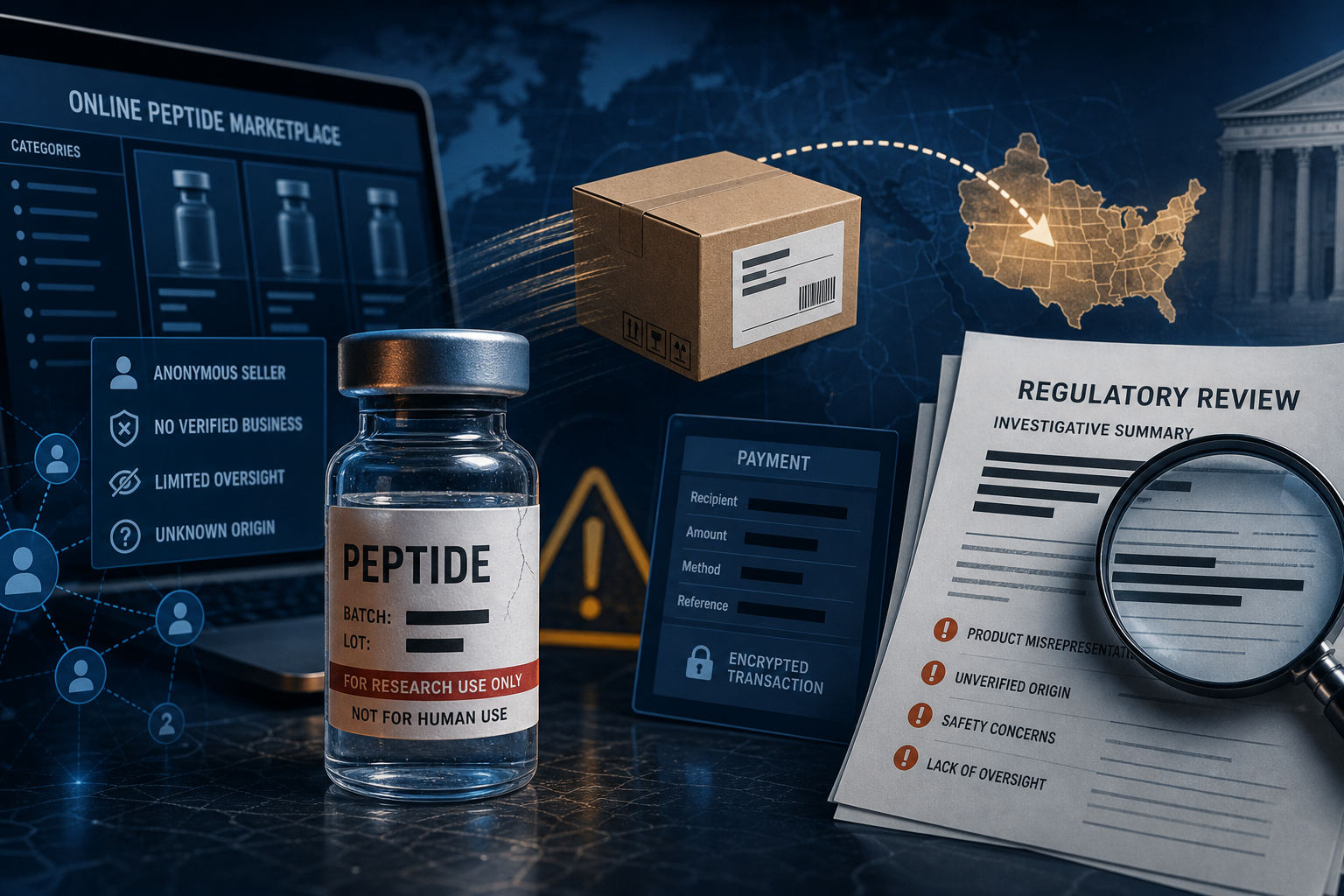
China-Linked Peptide Scams: What 2026 Records Show
A July 2026 DOJ resolution involving Alibaba and a Utah indictment illustrate how opaque peptide supply chains, relabeling, and marketplace systems can expose consumers to unverified products.
Research context, evidence standards, and editorial approach

How to Use These Research Articles
Start with the topic links above to narrow the library, then open an article that matches your question. Compound profiles provide a quick orientation to names, mechanisms, research status, and linked literature, while full research articles explain study design, reported outcomes, and important limitations in more detail. Use publication dates and categories to understand context, and follow source links when you need to check the underlying paper, regulatory notice, or public record.
How We Read the Evidence
A finding in a randomized human trial does not carry the same weight as an observational association, an animal experiment, or an in-vitro result. When reading research articles, check the population, comparison group, sample size, follow-up period, measured endpoint, and whether the result was a primary or exploratory analysis. A plausible mechanism can explain why a compound is being studied, but it cannot establish human safety or efficacy by itself. We also separate approved medicines from investigational compounds and research-use-only materials so readers do not confuse biological interest with regulatory status.
Questions to Ask Before Drawing a Conclusion
- Was the study conducted in humans, animals, cells, or a laboratory model?
- Was there a control or comparison group, and was the study large enough to support the claim?
- Does the reported endpoint measure a meaningful outcome or only a short-term marker?
- Are the results peer reviewed, publicly registered, and reproducible?
- Does the article link to the primary source so the methods and limitations can be checked?
- What remains unknown, especially about long-term safety, product quality, or generalizability?
Editorial Approach and Primary Sources
GLP1Place aims to make technical research easier to follow without turning uncertain findings into promises. Articles identify whether evidence is clinical, observational, preclinical, mechanistic, or regulatory, and they use cautious language when a study cannot establish cause and effect. For primary literature, compare the article summary with PubMed research results and the original publication whenever a claim matters. Sources may change over time, so readers should verify current notices and consult qualified professionals for personal medical decisions.
Keeping Research Current
Research moves quickly, especially in obesity medicine, peptide science, cognitive research, and product-quality oversight. A newer paper may add context without overturning every earlier finding, while an agency alert or later correction can change how a claim should be understood. For that reason, this Blog page is organized as a living research library rather than a static list of conclusions. Check publication dates, read the most recent update when available, and treat headlines as a guide to the evidence—not as proof that a compound works, is safe, or is appropriate for a particular person. This page also connects related topics so readers can compare clinical research with preclinical studies and regulatory reporting in the same subject area.
Educational and research reference only: the information on GLP1Place is not medical advice, a diagnosis, or a treatment recommendation.
Use category archives to compare related reports and compound profiles; the date, category, and source context help explain how each item fits the broader research record. When a claim matters, start with the linked primary source and the relevant regulatory notice.