
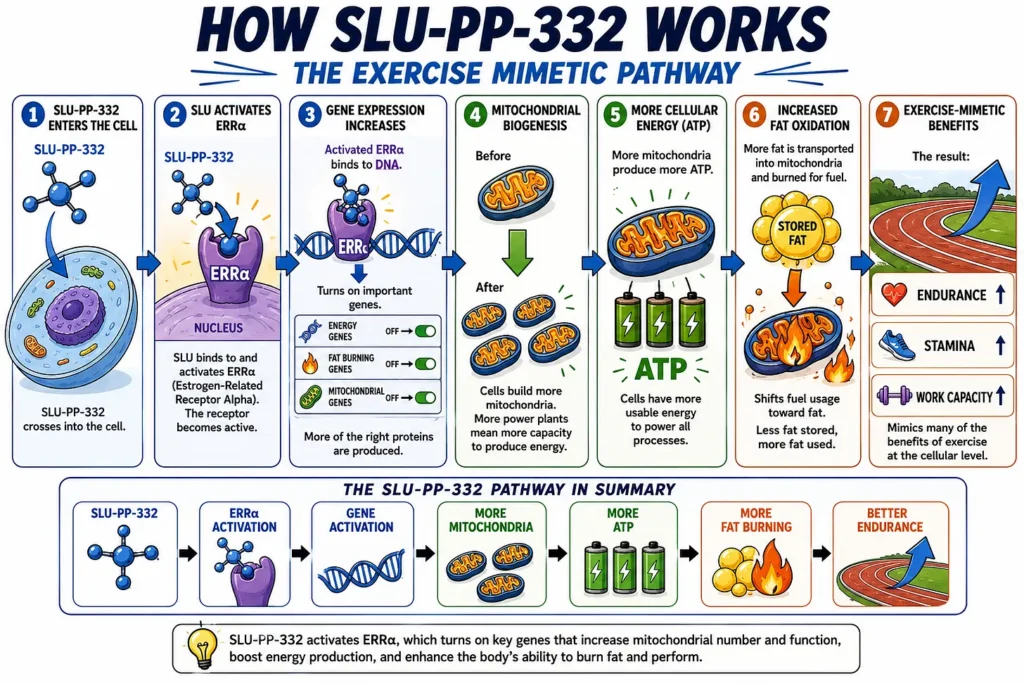
What Is SLU-PP-332? The “Exercise Pill” Research Explained
SLU-PP-332 is an ERR agonist compound being studied as a metabolic exercise mimetic. Here’s what the 2024 research actually shows — and what the headlines got wrong.

SLU-PP-332 is an ERR agonist compound being studied as a metabolic exercise mimetic. Here’s what the 2024 research actually shows — and what the headlines got wrong.
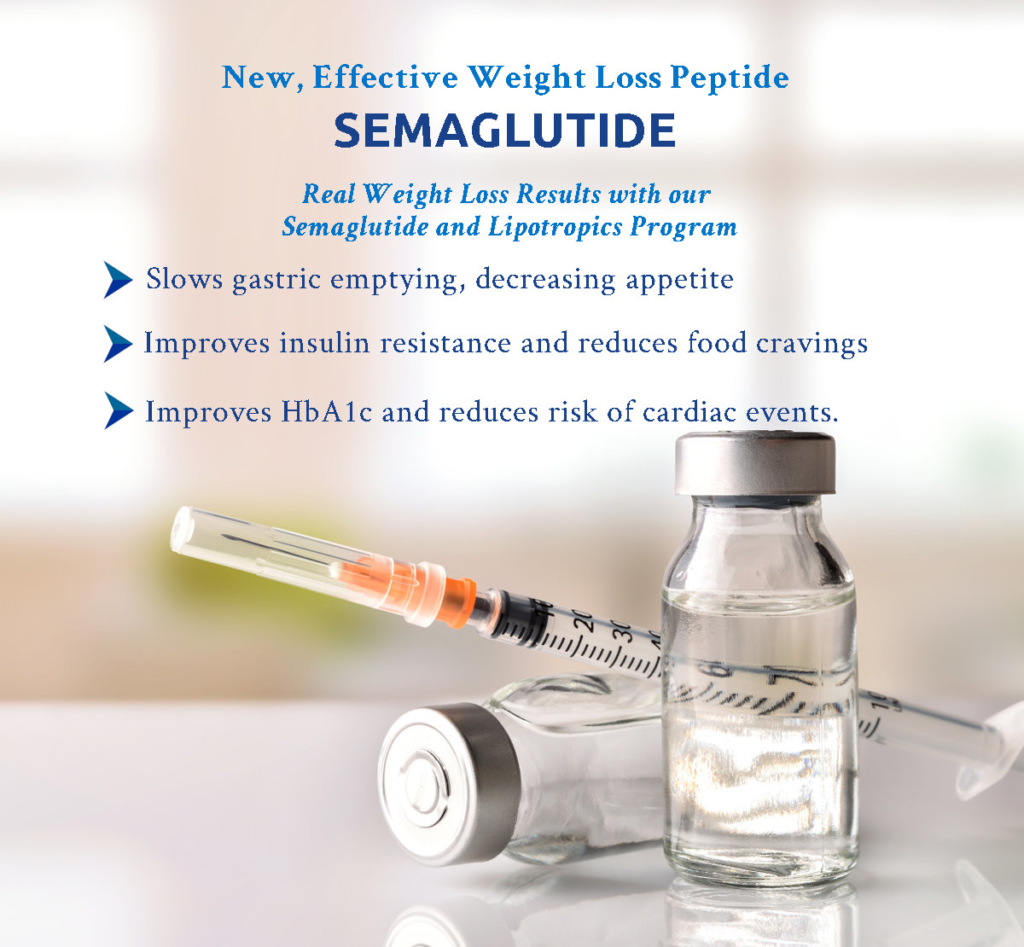
Ozempic and Wegovy are both semaglutide. The difference is dose and indication. Here’s a research breakdown of how 1mg vs 2.4mg changes the clinical picture.

PT-141, kisspeptin, and testosterone axis peptides — what published research shows about compounds studied in men’s health contexts, and where the evidence actually stands.

GHK-Cu, collagen peptides, and BPC-157 have all been studied in skin and hair research contexts. Here’s what the evidence shows and where it’s still early.
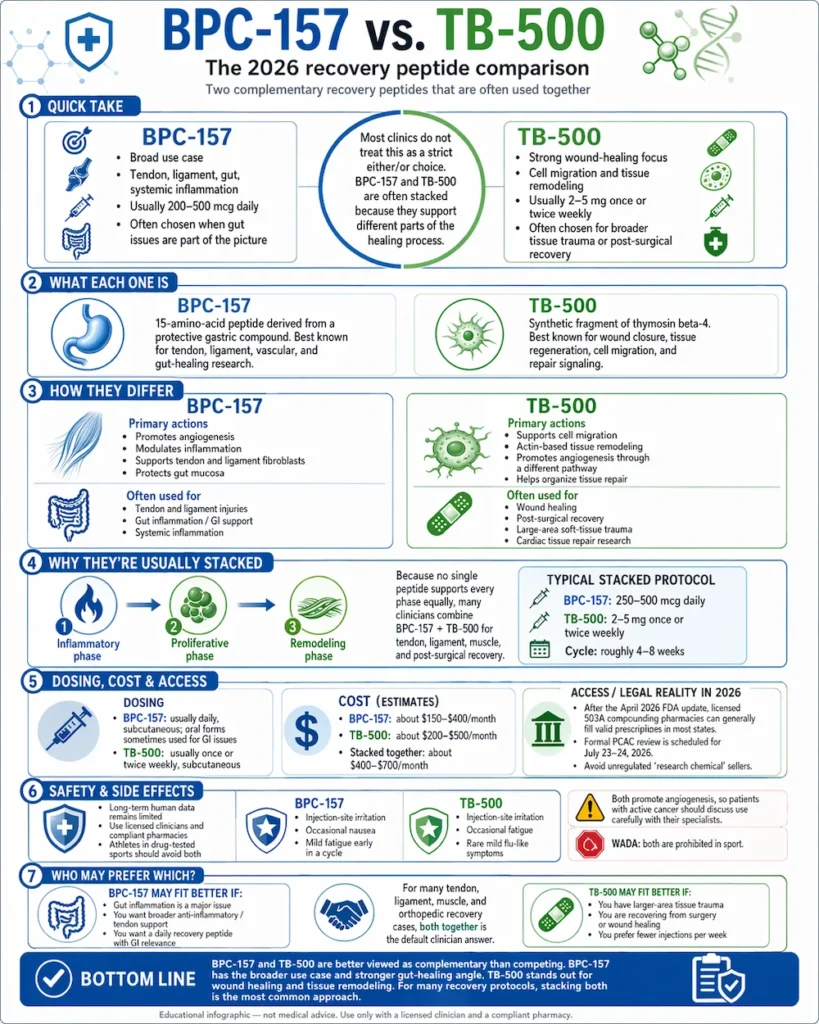
What does the published research say about combining tissue repair peptides with GH secretagogues? The mechanistic rationale, the evidence gaps, and how researchers think about multi-compound approaches.

In the span of about nine months, the research peptide market lost its largest vendor, watched federal agents physically raid

GLP-1 receptors exist throughout the brain — not just in the pancreas. The gut-brain axis mechanism explains appetite suppression, reward modulation, and nausea. Here’s the neuroscience.

TB-500 is a synthetic fragment of Thymosin Beta-4, studied for tissue repair, angiogenesis, and inflammation modulation. Here’s what the research actually shows.

Certificates of Analysis, HPLC purity, mass spectrometry verification, and the red flags that separate credible research suppliers from those that aren’t.

Fasting upregulates GLP-1 secretion through multiple pathways. Here’s the mechanistic overlap and what the research shows about combining fasting protocols with GLP-1 biology.