
GLP-1 Research

Published research summaries and educational context for GLP-1 receptor agonists including semaglutide, tirzepatide, and related compounds.

Editorial illustration of the VCT220 oral GLP-1 phase 2 obesity trial and its dose-dependent weight-loss findings
GLP-1 Research

VCT220 Oral GLP-1 Trial: What the Phase 2 Results Mean

A peer-reviewed phase 2 study published August 14, 2026, adds VCT220 to the growing field of oral, nonpeptide GLP-1 receptor agonists. In 250 Chinese adults with overweight or obesity, once-daily VCT220 produced dose-dependent weight loss over 16 weeks, with the highest reported group reaching a 9.73% mean reduction from baseline compared with 1.61% for placebo. The results are important because VCT220 is designed to be taken orally without the absorption constraints associated with oral semaglutide, but the study remains short, geographically limited, and insufficient to establish long-term efficacy or safety.

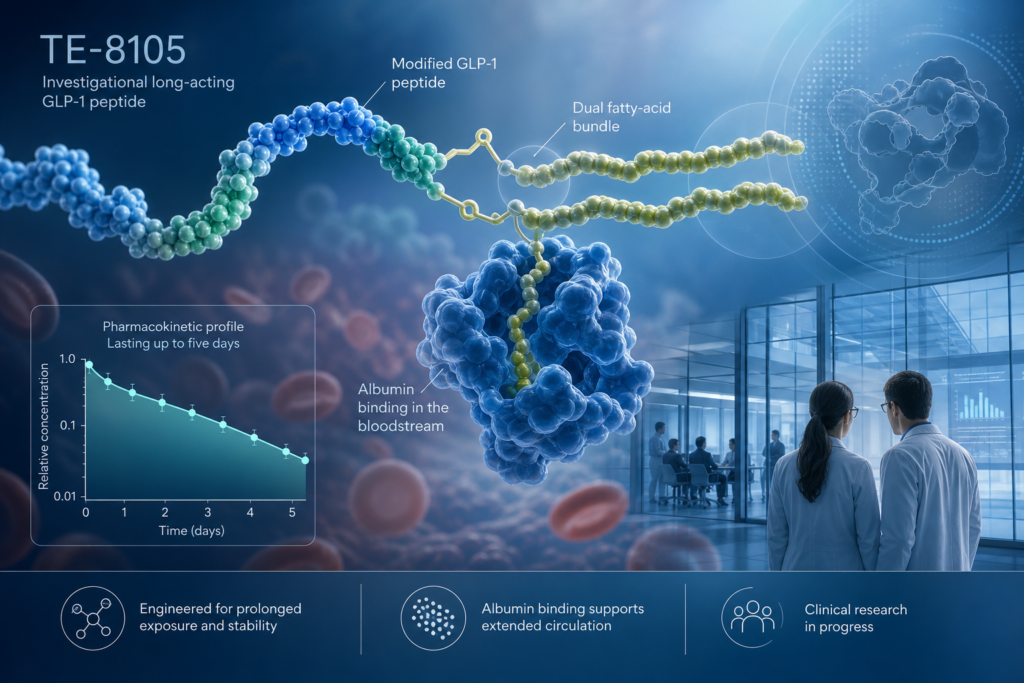
Illustration representing tirzepatide cardiovascular risk research and the three-year SURMOUNT-1 analysis
GLP-1 Research

Tirzepatide Cardiovascular Risk: What the 3-Year SURMOUNT-1 Analysis Shows

A new three-year analysis of SURMOUNT-1 suggests tirzepatide may lower predicted cardiovascular risk in adults with obesity or overweight and prediabetes. The findings are encouraging, but they are based on a risk model rather than a dedicated cardiovascular-outcomes trial, so they do not yet establish that tirzepatide prevents heart attacks, strokes, or cardiovascular death.

Scientific illustration explaining TE-8105 long-acting GLP-1 design, albumin binding, and extended half-life
GLP-1 Research

TE-8105 Long-Acting GLP-1: What the First Human Trial Found

A first-in-human study published July 30, 2026, provides the first peer-reviewed clinical data on TE-8105, an investigational long-acting GLP-1 receptor agonist designed for less frequent dosing. The small Phase 1/2a study found a plasma half-life of approximately 120 hours, early weight-loss signals, and mostly mild gastrointestinal adverse events. The findings are technically important, but they remain preliminary and cannot establish efficacy, long-term safety, or regulatory approval.

Clinical research illustration showing TERN-601 oral GLP-1 weight-loss data alongside liver safety signals
GLP-1 Research

TERN-601 Obesity Trial: Why Liver Safety Ended the Oral GLP-1 Program

The TERN-601 obesity trial delivered a useful warning for the next generation of oral GLP-1 medicines. The once-daily nonpeptide agonist produced dose-dependent weight loss, appetite suppression, and delayed gastric emptying in early clinical studies. But three Phase 2 participants developed liver-enzyme elevations consistent with potential drug-induced liver injury, including one potential Hy’s Law case. The program was discontinued, making TERN-601 an important case study in why oral GLP-1 development is about more than convenience and weight-loss efficacy.

Research Tools
Scroll to Top