Tirzepatide (dual GIP/GLP-1) was already a significant advance over selective GLP-1 agonists. Retatrutide (LY3437943), developed by Eli Lilly, adds a third receptor to the equation: the glucagon receptor. This triple agonist approach represents the current frontier of incretin pharmacology, with Phase 2 results that generated substantial scientific interest.
The Three-Receptor Mechanism
Retatrutide simultaneously activates:
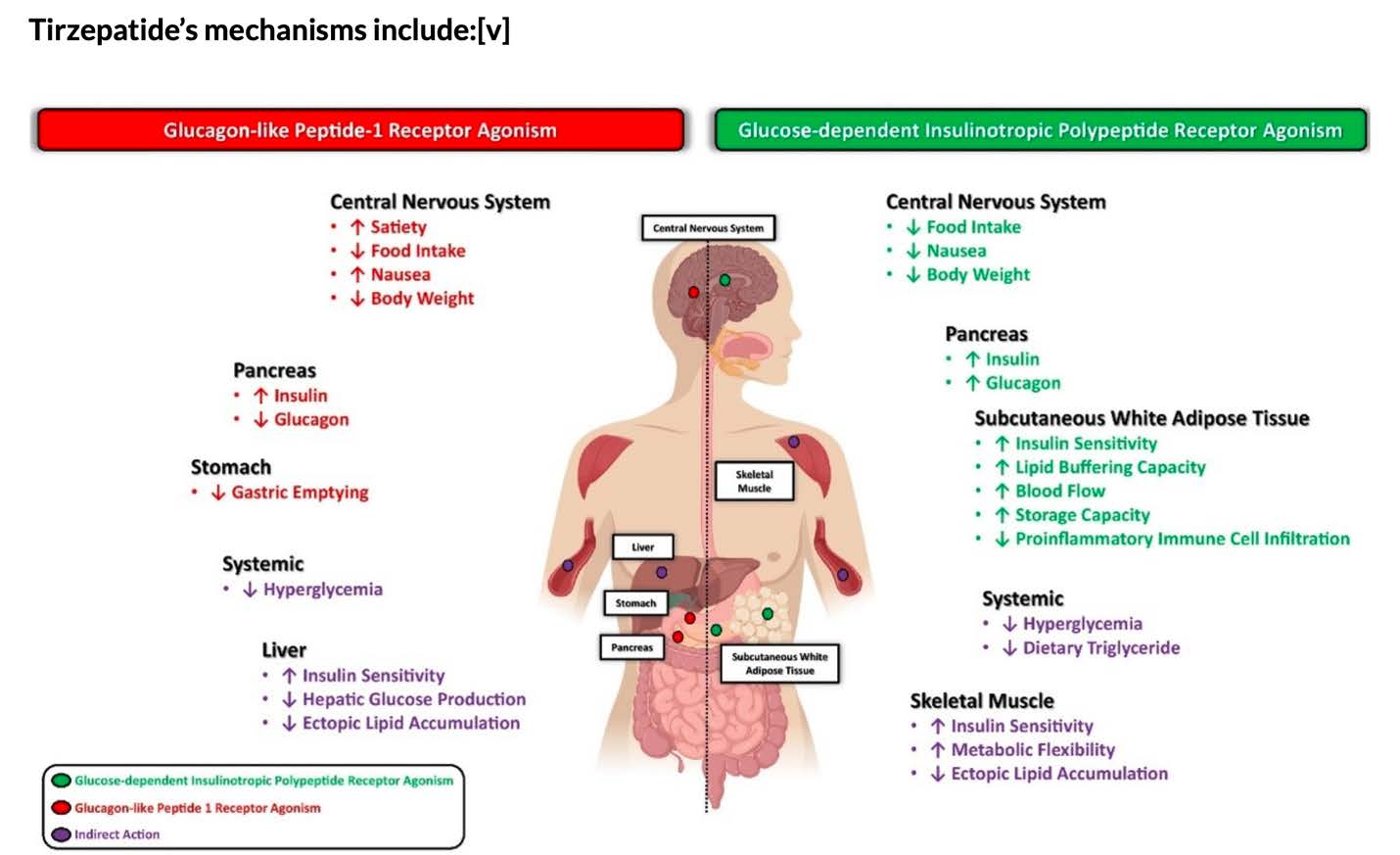
- GLP-1 receptor: Insulin secretion, glucagon suppression, gastric emptying delay, appetite reduction, satiety signaling
- GIP receptor: Additional insulin secretion, adipose tissue effects, potential synergy with GLP-1R signaling
- Glucagon receptor: Historically considered counterproductive (glucagon raises blood glucose), but at appropriate ratios combined with GLP-1/GIP agonism, glucagon receptor activation increases energy expenditure and promotes fatty acid oxidation in the liver
The glucagon component is the key pharmacological novelty. Glucagon receptor activation drives thermogenesis and hepatic fat oxidation — adding a metabolic expenditure component that the dual GLP-1/GIP agonists lack. The challenge is balancing glucagon activity so it enhances energy expenditure without raising blood glucose — the GLP-1 and GIP components handle the glycemic counterbalance.
Phase 2 Data (2023)
Published in NEJM in June 2023. 338 participants with obesity (no diabetes), 24 weeks, multiple dose arms.
- Highest dose group (12mg): mean body weight reduction of 24.2% at 24 weeks
- Lower doses: 8.7-17.5% depending on dose arm
- Side effect profile: primarily GI (nausea, vomiting, diarrhea) — similar to tirzepatide
- Heart rate increases observed (~5-8 bpm at higher doses) — the glucagon component raises heart rate, warranting monitoring
24.2% at 24 weeks is a remarkable number — particularly compared to tirzepatide’s ~20% at 72 weeks. The shorter trial duration and smaller sample limit direct comparison, but these results indicate a genuinely different efficacy ceiling may be achievable with triple agonism.
Phase 3 Status
As of 2024-2025, retatrutide is in Phase 3 trials (TRIUMPH program) for obesity and type 2 diabetes. Results are expected 2025-2026. If Phase 3 data matches Phase 2 signals, retatrutide could represent another significant step change in this pharmacological class.
Phase 3 TRIUMPH Results: What’s Actually Been Reported
The Phase 3 TRIUMPH program has begun reporting results through 2025 and 2026, and the topline numbers have generally confirmed the strong signal seen in Phase 2. TRIUMPH-4 reported in December 2025 that participants lost up to 28.7% of body weight at 68 weeks — the program’s first successful Phase 3 readout. TRIUMPH-1, reported May 21, 2026, followed with 28.3% average weight loss at 80 weeks across 2,339 participants on the 12mg dose, and participants with a starting BMI of 35 or higher who remained on the drug through 104 weeks lost up to 30.3% of body weight (an average of about 85 pounds). A separate program, TRANSCEND-T2D-1, studied retatrutide specifically in type 2 diabetes and reported up to a 2.0 percentage-point HbA1c reduction alongside 16.8% weight loss in 537 patients — a smaller effect size than the pure-obesity trials, which is expected given the different patient population and comorbidity profile.
What’s Still Pending
As of mid-2026, seven additional Phase 3 trials in the TRIUMPH and related programs are expected to report results throughout the remainder of the year, covering additional obesity endpoints, type 2 diabetes, obstructive sleep apnea, and MASLD (metabolic dysfunction-associated steatotic liver disease) — reflecting Eli Lilly’s strategy of pursuing multiple indications in parallel rather than sequentially. An FDA submission is estimated for Q4 2026 or Q1 2027, meaning retatrutide remains an investigational compound with no FDA approval and no legal prescription pathway as of this writing — anyone encountering retatrutide marketed for sale outside a clinical trial context should treat that as a significant red flag regardless of how compelling the Phase 3 data appears.
Why the Glucagon Receptor Addition Matters Mechanistically
Adding glucagon receptor activity to the GLP-1/GIP combination is mechanistically distinct from simply adding a third weight-loss lever. Glucagon receptor activation increases hepatic glucose output and energy expenditure through effects on lipolysis and thermogenesis — effects that, unmanaged, could worsen glycemic control. Retatrutide’s design deliberately balances this glucagon-driven glucose-raising tendency against the glucose-lowering effects of simultaneous GLP-1 and GIP activation, aiming for a net metabolic profile that captures glucagon’s energy-expenditure benefits without its diabetogenic downside. This balancing act is precisely why triple-agonist development is pharmacologically harder than simply combining known-safe single mechanisms, and why the multi-year Phase 3 program is scrutinizing glycemic safety data as closely as weight-loss efficacy.
Frequently Asked Questions
Is retatrutide FDA-approved as of 2026?
No. As of mid-2026, retatrutide remains investigational, with Phase 3 trials still reporting results and an FDA submission estimated for late 2026 or early 2027.
How much weight loss have Phase 3 trials shown?
TRIUMPH-1 reported 28.3% average weight loss at 80 weeks (12mg dose), with participants at higher starting BMI who continued treatment reaching up to 30.3% at 104 weeks — broadly consistent with the strong Phase 2 signal.
Why add a glucagon receptor to a GLP-1/GIP drug?
Glucagon receptor activation increases energy expenditure and lipolysis, potentially adding a metabolic lever beyond appetite suppression — but it also raises blood glucose, which is why balancing it against GLP-1/GIP’s glucose-lowering effects is a central pharmacological challenge for this drug class.
Educational content. Retatrutide is an investigational compound not yet FDA-approved. Phase 2 data is promising but Phase 3 confirmation is required. Not medical advice.