The intersection of GLP-1 receptor agonists and research peptides has become one of the most active areas in biohacking communities in 2025. This article covers what the community is exploring, why, and what the published literature says about the rationale — without making any dosing recommendations. This overview specifically addresses the biohacker’s stack, and related research is indexed on PubMed.
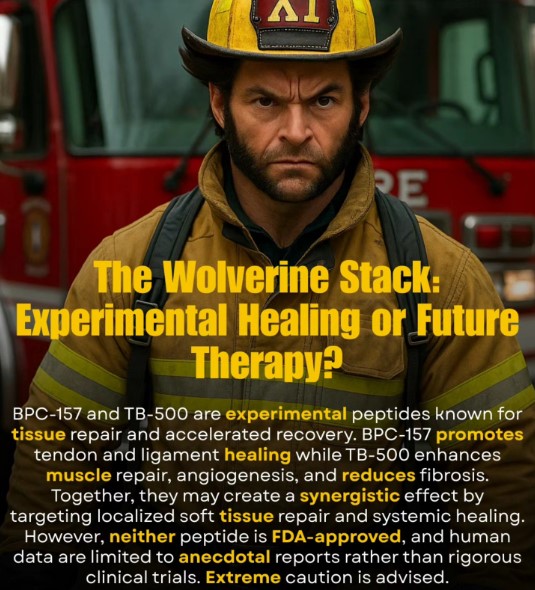
Why Biohackers Are Combining GLP-1 Compounds with Peptides
The fundamental interest stems from combining different mechanism classes: GLP-1 agonists act centrally and peripherally on metabolic pathways, while research peptides typically target more localized tissue or hormonal processes. The hypothesis is that combining these might address different aspects of body composition, recovery, and longevity simultaneously — though this is largely theoretical at the individual human level.
The “GLP-1 + GH Axis” Combination
One of the most discussed combinations in research forums involves pairing a GLP-1 agonist with a GH secretagogue stack (typically CJC-1295 + Ipamorelin or CJC-1295 + GHRP-6). The rationale:
- GLP-1 agonists reduce body fat through appetite and metabolic mechanisms
- GH secretagogues are theorized to support lean mass preservation and recovery during caloric deficit states
- The combination may help address the muscle loss concern sometimes reported with aggressive GLP-1 protocols
There is no published human RCT on this specific combination. The rationale is mechanistic inference from separate compound literatures.
GLP-1 + BPC-157 for GI Management
Some researchers report GI side effects (nausea, gastroparesis-adjacent symptoms) during GLP-1 protocols, particularly early in dose escalation. BPC-157’s GI cytoprotective effects in rodent models have made it a popular paired compound in biohacking circles, with the hypothesis that it may support gastric mucosal integrity during periods of altered GI motility.
Again — this is mechanistic hypothesis, not clinical evidence. But it represents the type of informed self-experimentation that characterizes serious biohacking: using published mechanism data to design rational compound combinations.
The Cognitive Layer: Adding a Nootropic
Interestingly, the published literature on GLP-1 receptors in the CNS has generated interest in combining GLP-1 protocols with nootropic peptides like Semax or Selank. The rationale: GLP-1 receptors are expressed in hippocampal and cortical regions; preclinical data suggests neuroprotective effects. Some biohackers are stacking Semax (for BDNF modulation) alongside GLP-1 protocols, treating the combination as a CNS optimization layer.
Longevity-Oriented Stacks
More ambitious longevity-focused biohackers are building broader stacks that might include: GLP-1 agonist + GH peptide stack + BPC-157 + NAD+ precursor (NMN or NR) + a senolytic protocol. The theory is targeting multiple aging hallmarks simultaneously: metabolic health, tissue repair capacity, GH axis optimization, NAD+ decline, and cellular senescence.
This is sophisticated but largely extrapolated. Each component has independent preclinical or clinical evidence for its proposed mechanism — the synergistic combination remains theoretical.
What Good Biohacking Actually Looks Like
The most sophisticated biohackers treat themselves as n=1 experiments. They:
- Establish baselines before starting (bloodwork, body composition, sleep metrics, cognitive testing)
- Change one variable at a time where possible
- Track biomarkers throughout (quarterly labs minimum)
- Use published research to form hypotheses, not to claim certainty
- Document and share findings with the community
The Real Problem Driving Much of This Combination Interest: Lean Mass Loss
Much of the community rationale for stacking GLP-1 therapy with other compounds traces back to a well-documented and genuinely significant finding: published trial data indicates lean body mass accounts for roughly 25-39% of total weight lost during semaglutide and tirzepatide therapy — a meaningfully higher proportion of muscle loss than seen with some other weight-loss approaches, even though the absolute amount of lean mass lost is generally modest and most studies have not found consistent deterioration in strength or physical function. This finding, published across multiple 2025-2026 clinical nutrition and endocrinology reviews, is the actual clinical concern driving interest in adding growth-hormone-axis peptides, and it’s worth separating from vaguer “combine for better results” community framing — there’s a specific, named physiological problem (disproportionate lean mass loss) that combination approaches are trying to address.
What Actually Has Trial Data Behind It
Two evidence-backed approaches to this specific problem are worth highlighting, because they contrast with less-studied peptide-stacking approaches: first, resistance training combined with adequate protein intake (research generally cites roughly 1.2-1.6 g/kg body weight per day) has been shown in controlled studies to meaningfully reduce fat-free mass loss during GLP-1 therapy — one 2025 study of 200 adults combining GLP-1 medication with structured resistance training and individualized protein targets reported roughly 13% total body weight loss with only about 3% muscle mass loss over six months, and separate research has found resistance training 2-3 times weekly can reduce fat-free mass loss by 30-50% relative to no-exercise controls without compromising fat loss. Second, on the pharmacological side, the Phase 2 BELIEVE trial combined semaglutide with bimagrumab (a myostatin/activin pathway-inhibiting antibody, not a peptide in the RUO sense but a monoclonal-antibody drug candidate) and reported reducing the lean-mass fraction of total weight loss from roughly 21% down to about 7% — a substantial effect, though bimagrumab remains an investigational compound in formal trials, not an RUO research peptide available through the channels discussed elsewhere on this site.
This distinction matters: the best-evidenced interventions for the lean-mass-loss problem (resistance training, protein intake, and investigational antibody therapies studied in formal trials) are different from, and considerably better supported than, the informal RUO peptide combinations more commonly discussed in biohacking forums for this same purpose.
Frequently Asked Questions
Does everyone on GLP-1 therapy lose a dangerous amount of muscle?
No — while lean mass makes up a disproportionate share of total weight lost compared to some other weight-loss methods, most studies report the absolute lean mass loss is modest and haven’t found consistent negative effects on strength or function, particularly when resistance training and adequate protein intake are part of the regimen.
Is bimagrumab the same kind of compound as GH secretagogue peptides discussed elsewhere on this site?
No — bimagrumab is a monoclonal antibody targeting the activin/myostatin signaling pathway, a fundamentally different drug class and mechanism from the small peptide secretagogues (like ipamorelin or CJC-1295) commonly discussed in biohacking contexts, and it remains an investigational compound studied in formal clinical trials rather than an RUO research peptide.
What has the strongest evidence for preserving muscle during GLP-1 therapy today?
Based on current published research, structured resistance training combined with adequate protein intake has the most direct, replicated supporting evidence of any approach discussed here — considerably more than any RUO peptide combination currently circulating in community discussion.
Disclaimer
This article describes what is being discussed and explored in biohacking communities, with educational context from published research. It is not a protocol recommendation, not medical advice, and not an endorsement of any specific compound or practice. All compounds mentioned should be used only in accordance with applicable laws and regulations in your jurisdiction.